
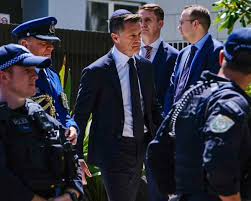

Bondi terror attack updates: Aftermath, national response and proposed protest restrictions
Australia is in mourning after a deadly terror attack at Bondi Beach in Sydney that killed at least 15 people and wounded many more during a Jewish Hanukkah celebration. The mass shooting has shaken the nation’s sense of security and drawn urgent calls for legislative reforms on multiple fronts.
The attack occurred during an outdoor Jewish festival, where families and community members were gathered to celebrate. The assailants opened fire, and two officers were among those injured responding to the scene.
Authorities have confirmed that the two attackers were a father and son, identified as Sajid Akram and his 24‑year‑old son Naveed, both of whom opened fire on the crowd. Sajid Akram was killed at the scene by police, and Naveed remains in critical condition in hospital under custody.
The incident has been officially declared a terrorist attack targeting the Jewish community. Flags and material linked to an extremist group were found at the scene, and investigators are treating the shooting as ideologically motivated.
In the days since the attack, funerals and memorials have taken place for the victims, including community leaders and families. The loss has brought profound grief to Sydney’s Jewish community and reverberated across Australia and internationally.
Prime Minister Anthony Albanese has condemned the act as “an attack not just on Jewish Australians, but on every Australian,” highlighting the terror element of what unfolded and the need to confront hatred and antisemitism. Albanese called for unity and pledged that the government will pursue reforms in response.
A central focus of the government’s legislative response is gun control. Albanese has proposed stricter national gun laws, including limits on the number of firearms an individual can legally own, tighter background checks, and potential restrictions on certain weapon types. These proposals are being discussed at the National Cabinet level.
The Bondi attack has renewed national debate about the adequacy of current licensing and screening systems for firearms. At least one of the shooters was a licensed gun owner with multiple weapons, raising questions about how radicalized individuals might gain access to firearms.
State leadership in New South Wales has also indicated plans for a parliamentary recall to consider urgent reform, including changes to gun licensing and appeals procedures. The aim is to prevent a recurrence of such mass violence.
In addition to gun law reform, the NSW premier has suggested new measures to restrict protests that occur during or immediately after terrorism declarations. He argued that limiting certain demonstrations in such sensitive moments could reduce the risk of what he described as a “combustible situation” in the community.
These comments have drawn attention to the broader tensions between civil liberties, public order, and community safety. Any new restrictions on protests would likely prompt debate about the balance between free expression and maintaining public security.
Security forces have been stepped up around Jewish institutions and public gathering places nationwide, and there have been widespread calls from faith and political leaders to address not only terrorism but also the rise of antisemitism within Australia.
Some critics have questioned how the attackers were not flagged as imminent threats despite earlier contact with intelligence authorities. Debates are emerging about intelligence oversight and whether current counter‑terrorism strategies are sufficient.
Law enforcement and political figures have defended the police response to the attack, emphasizing the bravery of officers who confronted the gunmen despite limited resources. The premier and police commissioner have underscored that officers engaged the attackers under extremely dangerous conditions, even as questions remain about preventative measures.
The tragic incident has reverberated beyond Australia’s shores, drawing international condemnations and solidarity with the victims and their families. Leaders worldwide have called for unified action against terrorism and hate‑motivated violence.
As Australia grapples with the aftermath of this horror, conversations continue over how best to protect vulnerable communities, enforce gun safety, and safeguard civil liberties. The coming weeks will likely see intense political debate, legislative action, and ongoing efforts to support survivors and commemorate those lost in the attack.
