
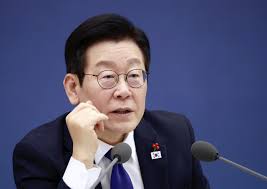

South Korea’s president has ignited a nationwide debate by urging that treatments for hair loss be considered for inclusion under the country’s public health insurance system, describing the issue for some young people as “a matter of survival.” His remarks have drawn sharp reactions across society and raised broader questions about how health, mental wellbeing, and social pressure are defined in modern South Korea.
Speaking during a recent policy discussion, President Lee Jae Myung called on government officials to review whether the National Health Insurance Service should expand coverage to include common hair loss treatments. At present, only limited forms of hair loss linked to specific medical conditions are covered, while treatments for hereditary or age-related baldness are excluded and must be paid for out of pocket.
The president emphasized that hair loss is no longer viewed merely as a cosmetic issue, particularly among younger generations. In a society where appearance plays a significant role in social interactions, dating, and even employment opportunities, he argued that losing one’s hair can have serious psychological and emotional consequences. For some, he suggested, the stress and stigma associated with hair loss can be deeply damaging.
Lee also pointed to concerns among younger citizens who contribute regularly to the national insurance system but feel they receive limited benefits in return. He suggested that expanding coverage in areas that directly affect younger people could help restore confidence in the fairness and inclusivity of the public healthcare system.
The proposal, however, has been met with strong opposition from medical professionals and conservative commentators. Critics argue that public health insurance should prioritize life-threatening illnesses and serious medical conditions rather than treatments traditionally considered cosmetic. They warn that expanding coverage to include hair loss therapies could divert limited resources away from patients with more urgent needs.
Medical associations have expressed concern about the financial sustainability of the health insurance system. With South Korea facing rising healthcare costs and a rapidly aging population, critics fear that adding new categories of coverage could worsen existing financial pressures and accelerate projected deficits within the insurance fund.
Government health officials have taken a more cautious stance. While acknowledging the emotional and psychological impact that hair loss can have, they have stressed that any change to coverage rules would require extensive review. Officials noted that current insurance standards are based on medical necessity and clinical severity, and altering those standards would have wide-ranging implications.
The financial context adds another layer of complexity to the debate. South Korea’s national health insurance system is already under strain due to demographic shifts and increased demand for medical services. Projections suggest that without reforms, the system could face significant budget shortfalls in the coming years, making any expansion of benefits politically and economically sensitive.
In response to these concerns, the president floated possible compromises. These could include partial coverage, limits on the number of treatments, or caps on total expenditures related to hair loss therapies. He argued that even limited coverage could help lower costs, reduce financial stress for patients, and acknowledge the legitimacy of their concerns.
Public reaction has been mixed. Many younger people and online commentators have welcomed the discussion, saying it reflects a growing recognition that mental health and self-esteem are integral parts of overall wellbeing. Supporters argue that the rigid distinction between cosmetic and medical treatments no longer reflects real-life experiences in a highly competitive and appearance-conscious society.
Others remain skeptical. Some citizens worry that broadening the definition of healthcare needs could open the door to endless demands and weaken the system’s ability to care for those with serious illnesses. They argue that empathy for hair loss sufferers should not come at the expense of patients battling life-threatening conditions.
Beyond the immediate policy question, the controversy has sparked a wider conversation about the role of universal healthcare in addressing quality-of-life issues. As societal values evolve, so too does the question of what public health systems should cover and whom they should prioritize.
For now, the government faces the challenge of balancing fiscal responsibility with changing public expectations. Whether or not hair loss treatments are eventually covered, the debate has already highlighted generational divides and the growing demand for healthcare policies that reflect both physical and mental wellbeing.
What began as a single comment has become a symbol of larger tensions within South Korean society, touching on fairness, identity, and the evolving meaning of health in a modern, high-pressure environment.
