

Exploring the Hagia Sophia in Istanbul


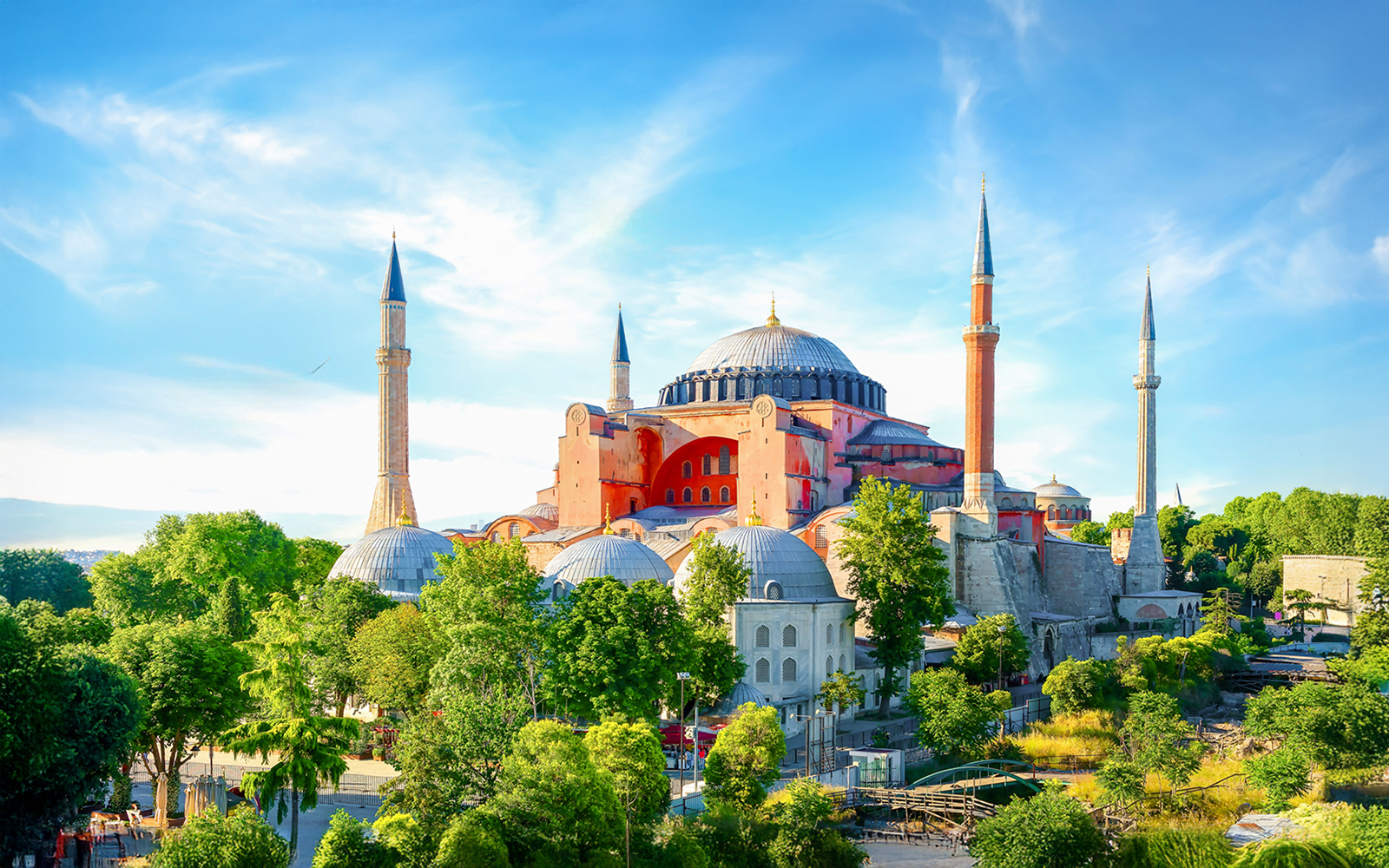
Rising majestically in the heart of Istanbul, the Hagia Sophia stands as one of the most historically significant and architecturally breathtaking monuments in the world.
For centuries this remarkable structure has shifted identities — from an imperial cathedral to a mosque, then to a museum, and today it continues to captivate visitors from across the globe.
Walking toward its massive stone walls and soaring domes, you feel as though you are approaching a place where time itself slows, inviting you to absorb layers of human history.
Dating back more than 1,400 years, the Hagia Sophia was originally constructed under the Byzantine emperor Justinian in the 6th century, symbolizing the strength and spirituality of his empire.
Its design was revolutionary for its time, introducing an immense central dome that seems to float above the main hall, capturing light and shadow in a way that feels almost mystical.
This architectural wonder held the title of the world’s largest cathedral for nearly a thousand years, astonishing travelers, worshippers, and scholars alike.
The influence of Hagia Sophia’s engineering is felt across continents; many later churches and mosques borrowed elements of its groundbreaking design.
A Journey Through Time and Faith


Over the centuries, the Hagia Sophia’s identity evolved along with Istanbul itself, a city that bridges continents and cultures.
After the Ottoman conquest of Constantinople in 1453, the building was converted into a mosque, incorporating new artistic features such as minarets and Islamic calligraphy panels.
These additions blended with the earlier Christian mosaics — many of which had been plastered over — creating an extraordinary visual dialogue between traditions.
In modern times, the Hagia Sophia was transformed into a museum, opening its doors to people of all backgrounds and beliefs, reflecting its role as a shared heritage treasure.
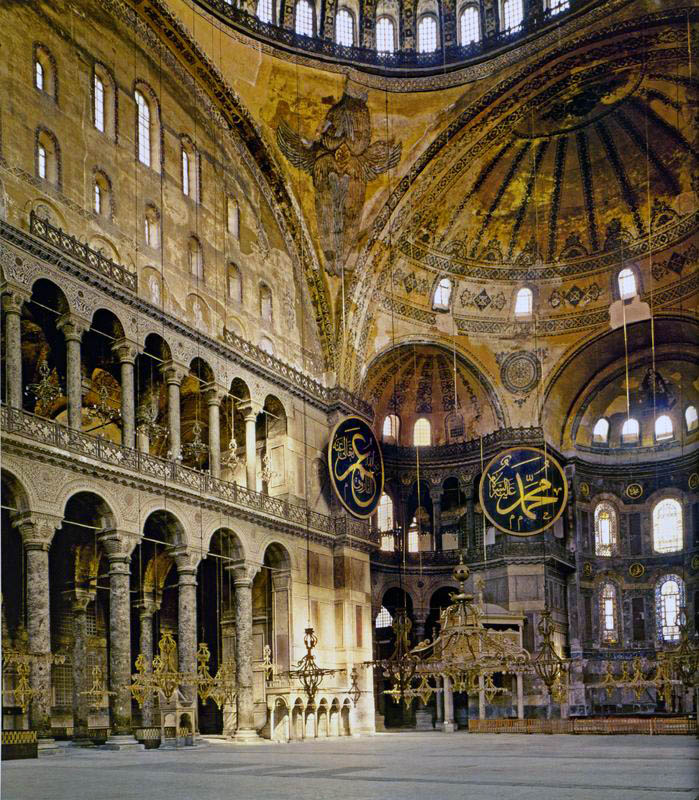
Today, as you step into the vast interior, the harmony of sacred art, soaring space, and layered history is palpable.
Sunlight filters through high windows, illuminating intricate mosaics of ancient emperors and serene figures, each whispering stories from a distant past.
Beneath the grand vaults, visitors often pause, struck by the scale of the building and the sense of continuity that links empires and epochs.
What to Expect on Your Visit
Visiting the Hagia Sophia is an experience that engages both the eyes and the mind.
Expect to walk through enormous doorways into a vast central hall where the sound of footsteps and hushed voices echo beneath the great dome.
The vast dome reaches a height of more than 55 meters above the ground, supported by massive piers that seem to anchor the heavens above.
Mosaics depicting figures from early Christian history peek out among elegant Arabic script panels added later, inviting reflection on the complex heritage of the site.
Around the nave, massive circular signs bear the names of significant Islamic figures in elegant calligraphy, forming a striking contrast with the earlier Byzantine art.
Many visitors find that spending time near these artistic elements gives a deeper appreciation of how cultures have merged here over time.
Practical Tips for Travelers
If possible, plan your visit early in the morning or later in the afternoon to avoid large tour groups and enjoy quieter moments inside.
Wear comfortable shoes; the stone floors have stood for more than a millennium and reflect centuries of footsteps.
Modest dress is recommended out of respect for the building’s spiritual significance to many, even for travelers visiting purely for its historical and architectural value.
Be prepared for busy queues — the Hagia Sophia remains one of Istanbul’s most popular destinations, drawing travelers from every corner of the world.
Audio guides and informational plaques are available on site to help you understand the timeline of changes the building has undergone.
Take your time; lingering at different vantage points often reveals details you might otherwise miss.
Beyond the Building
While the Hagia Sophia itself is the centerpiece, its surroundings enrich the visit even further.
Just outside, the bustling neighborhood of Sultanahmet invites exploration, with historic streets, markets, and cafes where you can rest and reflect after touring the monument.
Nearby, the Blue Mosque, Topkapi Palace, and the ancient Hippodrome together form a cultural core that reveals much about Istanbul’s layered history.
Each of these sites can be combined with a Hagia Sophia visit to create a full day of exploration steeped in heritage and beauty.
Whether you are drawn by history, architecture, art, or simply the thrill of discovery, the area around the Hagia Sophia offers many surprises.
Why the Hagia Sophia Endures
The enduring appeal of the Hagia Sophia lies not only in its astonishing scale or artistic richness but also in its ability to tell complex stories.
It stands as a symbol of human achievement, a place where innovation met devotion, and where empires made their mark.
For many visitors, standing beneath the great dome feels like stepping into the pulse of history itself.
It reminds us that buildings are more than stone and mortar — they are vessels of memory, culture, and identity.
The Hagia Sophia continues to inspire awe, prompting reflections on how civilizations blend and evolve over time.
When you leave, you carry with you not just photographs, but a sense of having witnessed something rare and timeless.
