

Syrian Offensive Deepens Rift With Kurdish Forces
In a significant escalation of tensions in northern Syria, government troops have surged into towns long held by Kurdish fighters, a move that has dashed hopes for a political settlement between Damascus and the Kurdish authorities.
Over the weekend, the Syrian army pushed deeper across the country’s north, taking control of several strategic urban centres and surrounding areas that had been under Kurdish-led administration for more than a decade. The advance came after a fragile withdrawal arrangement collapsed and left both sides accusing each other of breaching commitments.
The offensive marks a sharp turn in the relationship between the central government and Kurdish groups, who once collaborated in the fight against extremist factions. Many Kurdish commanders and civilians have described the government’s bid to extend its authority as a betrayal of earlier understandings and undermining any future trust.
Collapse of a Fragile Deal
Earlier efforts to bridge differences between Damascus and the Kurdish administration centred on a deal aimed at integrating Kurdish fighters into the national army and reuniting fractured parts of the state. This accord, reached some months ago, was meant to dissolve longstanding divisions and build a framework for shared governance.
However, progress stalled as deep distrust persisted on both sides. Negotiations over command structures, the future of the Kurdish autonomous framework, and how Kurdish forces would be incorporated into state institutions repeatedly hit roadblocks. With these divisions unresolved, the accord gradually lost momentum and credibility.
In the run-up to the latest military move, government forces amassed along key points west of the Euphrates River. They called on Kurdish fighters to reposition themselves east of the river, effectively relinquishing control of several villages and towns without a fight as a gesture of goodwill. But what followed was far from peaceful.
Advance and Clashes
As Kurdish fighters began to withdraw from certain positions near the Euphrates, Syrian troops continued to push further into territory beyond the agreed redeployment line. Government forces quickly established control over towns such as Deir Hafer and Maskana, securing key infrastructure and deploying heavy vehicles across the region.
The Kurdish-led defense organisation denounced the advance as a direct violation of the withdrawal agreement. They reported intense clashes in areas that were not meant to be part of the arrangements, including around major oilfields and population centres still under Kurdish influence.
Heavy fighting erupted in some locations as armed units from both sides exchanged fire. Government officials and Kurdish commanders traded accusations, each blaming the other for igniting the latest round of violence. These confrontations have raised concerns that localized hostilities could widen into more sustained conflict.
Civilians Caught in the Crossfire
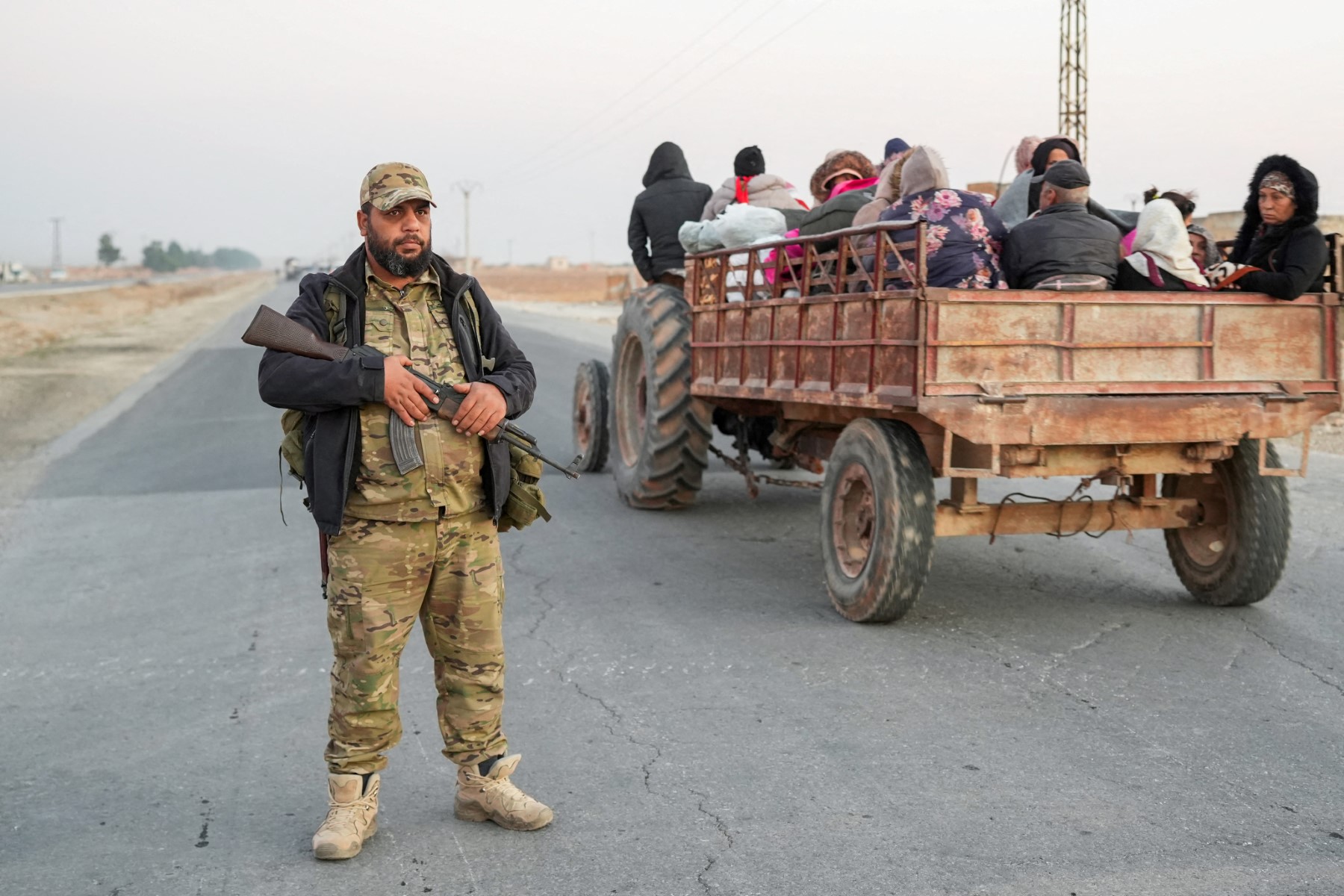
The offensive has had immediate humanitarian repercussions. As the Syrian army moved in, many civilians fled on foot or by vehicle, trying to escape areas of volatility. Reports indicate that thousands of families have abandoned their homes amid fears of escalating hostilities and the uncertainty of a changing security landscape.
In towns overtaken by government forces, residents returning under military escort have expressed mixed feelings. Some welcomed the restoration of state authority after years of instability, while others worried about potential reprisals or the return of restrictive governance. The mood in these areas remains fragile as locals assess what the shifts mean for their daily lives.
Humanitarian groups have emphasised that conflict-induced displacement brings urgent needs for shelter, food and medical care. Aid deliveries to affected populations have been complicated by ongoing clashes and damaged infrastructure in contested zones.
Kurds Decry Betrayal
The leadership of the Kurdish forces voiced strong condemnation of the Syrian government’s actions. In public statements, they described the military push as a betrayal of negotiated terms and a reneging of mutual commitments meant to lead toward lasting peace.
These sentiments have been echoed by Kurdish political representatives who argue that agreed-upon security arrangements were undermined by the timing and scope of the army’s incursion. The sense of betrayal has hardened Kurdish attitudes toward Damascus and made future dialogue more fraught.
Despite formal gestures from the government — including declarations recognising Kurdish cultural rights and language — many Kurdish voices insist these symbolic steps fall short of tangible protections or political power. They argue that real security for Kurdish communities hinges on respect for agreed boundaries and genuine autonomy within a reconstituted Syria.
International Response and Diplomacy
The developments have drawn scrutiny from international actors who have previously been engaged in Syria’s complex geopolitical landscape. Foreign governments have urged restraint and a return to diplomatic engagement, warning that renewed hostilities could destabilise the broader region and jeopardise fragile security gains.
Diplomatic efforts led by external parties have aimed at de-escalation and resumption of talks between Damascus and Kurdish representatives. Mediators have pressed both sides to recommit to previously brokered frameworks and to address grievances through negotiation rather than force.
However, with each side accusing the other of bad faith, the prospects for immediate compromise appear dim. External actors continue to advocate for calm and emphasise the importance of protecting civilians, but tangible influence on the ground remains challenging.
A Nation at a Crossroads
The latest offensive underscores the persistent fault lines that remain in post-war Syria. Years after the initial eruption of conflict, the country still grapples with how to reconcile diverse communities, balance central authority with local autonomy, and prevent the resurgence of large-scale violence.
For Kurdish populations, the stakes are particularly high. Many view this moment as a test of whether negotiated politics can coexist with military power or if force will continue to override meaningful compromise. In towns across northern Syria, the uncertainty of what comes next looms large.
As bottles of displaced families and returning residents navigate the disrupted landscape, the broader question facing the nation is whether there will be room for inclusive governance, or if the cycle of conflict will tighten its grip once more. With trust eroded and tensions rising, the path forward remains unclear and fraught with risk.
