
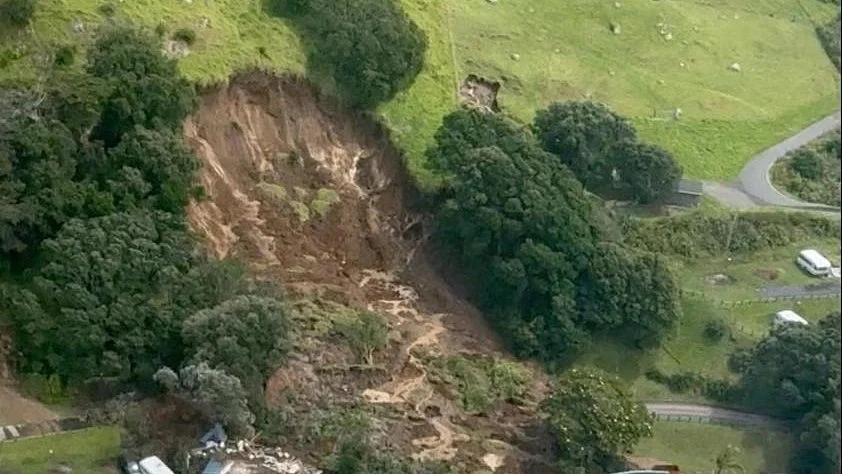

At least two people have been confirmed dead and several others remain missing after powerful landslides tore through parts of New Zealand’s North Island, leaving homes destroyed and a popular campground buried beneath mud and debris. Emergency services described the situation as rapidly evolving, with unstable ground continuing to pose serious risks to both survivors and rescuers. Torrential rainfall over several days is believed to have triggered the deadly slips. Authorities warned that further movement of earth remains possible as weather conditions persist.
The first deadly incident occurred during the early morning hours when a landslide struck a residential property in Welcome Bay. A large volume of soil collapsed onto the house without warning, trapping the occupants inside. Two people managed to escape the structure, but rescuers later recovered the bodies of two others from within the wreckage. The sudden nature of the collapse left little time for residents to react.
Police and fire crews worked through the morning to secure the area and assess the stability of the surrounding hillside. Heavy machinery could not be immediately deployed due to the risk of additional slips. Neighbors were evacuated as a precaution, with emergency officials emphasizing that safety remained the top priority. The incident sent shockwaves through the local community, many of whom were still asleep when the disaster struck.
Campground Buried as Hillside Gives Way
Several hours later, a second and far larger landslide occurred at a coastal holiday park in Mount Maunganui, dramatically escalating the crisis. A steep slope behind the campground collapsed, sending tonnes of mud, rocks, and uprooted trees crashing down onto tents, campervans, and shared facilities. The park was busy with holidaymakers, raising fears that many people may have been caught unaware. Emergency calls flooded in within minutes of the slide.
Rescue teams arriving at the campground were confronted with scenes of extensive destruction. Vehicles were crushed or partially submerged, while personal belongings were scattered across the site. Some cabins and tents were no longer visible, buried completely under debris. The scale of the damage made it difficult to immediately determine how many people had been present at the time.
Police later confirmed that at least six individuals were unaccounted for following the campground landslide. Officials cautioned that the number could change as authorities worked to verify who had been staying at the site. Some campers may have left earlier without formally checking out, complicating the process of identifying the missing. Despite these uncertainties, families anxiously awaited news as search efforts continued.
Search-and-rescue teams deployed trained dogs and specialist equipment in hopes of locating survivors beneath the debris. At several points during the operation, rescuers were forced to halt their work due to shifting ground and falling material. Emergency managers stressed that the unstable terrain posed a constant threat. Safety protocols required crews to withdraw whenever conditions deteriorated.
Rescue Efforts Hampered by Dangerous Conditions
In the initial hours after the landslide, reports emerged that voices had been heard coming from beneath the mud. These accounts raised hopes that some people might still be alive. However, worsening ground instability prevented crews from continuing deep excavation. Officials described the decision to pause operations as heartbreaking but necessary to avoid further loss of life.
By late evening, no survivors or additional victims had been recovered from the campground site. Authorities acknowledged that the chances of finding survivors diminish as time passes, particularly given the weight and density of the debris. Nevertheless, they emphasized that search efforts would continue as conditions allowed. Support services were deployed to assist families coping with uncertainty and fear.
Adding to the strain on emergency services, other weather-related incidents were reported across the region. In a separate case farther north, a man was reported missing after being swept from a roadway by floodwaters earlier in the week. Officials said the incident highlighted the widespread and dangerous impacts of the extreme weather system. Flooding, slips, and road closures were reported in multiple districts.
New Zealand’s prime minister traveled to the affected areas to meet with emergency responders and families of the missing. He expressed deep sympathy for those impacted and described the events as a national tragedy. The government pledged full support for local authorities managing the crisis. Residents were urged to follow official advice and remain alert to changing conditions.
Civil defence officials warned that saturated ground and continued rainfall significantly increased the risk of further landslides. People living near slopes were advised to watch for warning signs such as cracking soil, tilting trees, or unusual sounds. Authorities encouraged residents to evacuate immediately if they felt unsafe. Emergency alerts remained active across several parts of the North Island.
Community Impact and Ongoing Response
Road closures around the hardest-hit areas complicated access for rescue vehicles and heavy equipment. Some communities were temporarily cut off as engineers assessed damage to infrastructure. Power outages and communication disruptions added to the challenges faced by residents and responders alike. Local councils worked to restore essential services as quickly as possible.
The holiday park was closed indefinitely following the landslide, with officials establishing exclusion zones around the site. Security personnel were stationed to prevent unauthorized access and ensure public safety. Investigators also began documenting the damage as part of a broader assessment of the disaster. These evaluations will help determine long-term recovery and rebuilding needs.
Residents described feelings of shock and disbelief as they surveyed the aftermath. Many spoke of how quickly conditions changed from calm to catastrophic. Community centers opened their doors to displaced families, offering shelter, food, and emotional support. Volunteers from nearby towns also stepped forward to assist where possible.
Emergency authorities said the focus would remain on locating the missing while ensuring the safety of rescue teams. Once the search phase concludes, attention will shift toward recovery and support for those affected. Counseling services have been made available for families and responders alike. Officials acknowledged that the emotional toll of the disaster will last long after the physical cleanup is complete.
As New Zealand continues to grapple with increasingly severe weather events, experts say the disaster underscores the importance of preparedness and land-use planning. Steep terrain combined with intense rainfall creates heightened risks in many parts of the country. Authorities are expected to review safety measures at campsites and residential developments near unstable slopes. For now, the nation mourns the lives lost and waits anxiously for answers about those still missing.
