
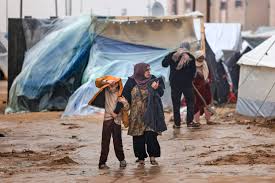

Gaza’s Tent Camps: Life in Limbo Despite Ceasefire
Fragile Peace, Persistent Hardship
Palestinians displaced in Gaza after years of conflict continue to live in crowded tent camps, struggling to envision a better future even as ceasefire efforts offer a temporary pause in fighting. The truce has reduced open hostilities, but the reality on the ground remains dire for many families. Basic needs such as shelter, food, and medical care are still in short supply, leaving residents in a state of constant uncertainty and fear.
For hundreds of thousands of people, tents have become a permanent home, often pitched on rubble-strewn streets, schoolyards, or areas damaged during previous airstrikes. These makeshift shelters provide minimal protection from the elements, with families exposed to scorching heat during summer and freezing conditions in winter. The lack of infrastructure and sanitation further exacerbates daily hardships, creating unsafe living conditions that put both children and adults at risk.
Inside the camps, overcrowding is the norm, with multiple families often sharing a single tent. Privacy is almost non-existent, and families live side by side in cramped spaces that offer little room to breathe. Water and electricity are scarce, with intermittent supply making it difficult to cook, clean, or maintain hygiene. The psychological toll is equally severe, as families struggle to cope with the trauma of repeated displacement and the loss of loved ones.
Aid Struggles Amid Border Challenges
Humanitarian aid has reached Gaza but remains insufficient to meet the enormous demand. Food distribution is limited, medical supplies are inadequate, and many shelters lack the basic materials needed for repair or expansion. While international organizations continue to push for increased assistance, logistical challenges at border crossings, particularly the Rafah crossing to Egypt, have restricted the delivery of aid on the scale required.
The Rafah crossing represents both hope and frustration for Gaza residents. While it offers a lifeline for those seeking medical treatment or critical supplies, its limited operational capacity and security restrictions mean that only a small fraction of the population can access these resources at any given time. For many, the crossing serves as a symbol of delayed promises and unmet needs, reminding them daily of the slow pace of reconstruction.
The ceasefire agreement, brokered with international support, has raised expectations for a more consistent flow of aid, yet months after the truce, only a fraction of the promised supplies have arrived. Essential items such as tents, tarpaulins, and construction materials remain in short supply. Aid organizations warn that without urgent intervention, the already fragile living conditions could deteriorate further, leaving the population increasingly vulnerable.
Children and Education: A Generation in Limbo
Children in Gaza face some of the harshest consequences of the ongoing crisis. Most schools were damaged or destroyed during the conflict, and makeshift classrooms in tents cannot provide a safe or effective learning environment. Supplies like books and stationery have only recently reached some areas, offering a brief glimmer of normalcy, but the interruption to education has left many children falling behind academically and socially.
Beyond schooling, the psychological impact on children is profound. The stress of displacement, exposure to violence, and ongoing uncertainty has created a generation burdened by trauma. Mental health services are scarce, and families often lack access to counselors or therapeutic programs. The combination of educational disruption and emotional strain threatens to hinder the development and well-being of young Palestinians for years to come.
Parents in the camps describe their daily struggle to protect their children from both physical harm and emotional distress. Limited play areas, overcrowded tents, and the constant presence of danger make it difficult for children to enjoy the simple activities that are essential to healthy development. For many, the hope of a better future depends not only on ending the conflict but on rebuilding social and educational structures that have been shattered.
Daily Survival in the Camps
Living in a tent camp means facing a constant battle for survival. Food insecurity is widespread, with families relying on sparse aid distributions or community kitchens. Access to clean water is intermittent, forcing residents to make difficult choices between drinking, cooking, and hygiene. Medical care is limited, and hospitals struggle to treat patients due to shortages of equipment and supplies.
The tents themselves are often inadequate for long-term habitation. Many are worn, torn, or poorly insulated, making them ineffective against the weather. Families must improvise repairs using whatever materials they can find, but these temporary solutions often fail under heavy rain or extreme heat. The lack of permanent housing prolongs the sense of instability and despair, keeping families trapped in an endless cycle of uncertainty.
Residents also face social and economic challenges. Many adults are unable to find work, and the collapse of local businesses has left families dependent on external assistance. The lack of employment not only limits income but also erodes dignity, as people feel powerless to provide for their families or contribute to their communities. Poverty, trauma, and uncertainty combine to create a situation that is as emotionally taxing as it is physically demanding.
Hopes and Frustrations
Despite these hardships, many Palestinians in Gaza cling to hope. Families dream of returning to rebuilt homes, of seeing children attend proper schools, and of having steady access to food, medicine, and basic services. The ceasefire has provided a brief window for these aspirations, but progress remains painfully slow.
The international community continues to press for unrestricted humanitarian access and the removal of obstacles that prevent aid from reaching those in need. Officials emphasize that without coordinated action, the conditions in Gaza will remain dire, and the cycle of displacement and suffering will continue. Reconstruction, they argue, cannot occur without both political commitment and substantial resources.
However, frustration runs deep among the displaced. Months of waiting, repeated promises, and ongoing political negotiations often seem disconnected from the immediate needs of families. For those living in tents, the ceasefire is a symbol of hope, but also a reminder that peace and stability remain fragile, and that true recovery is still far off.
Political Challenges and the Path Forward
The road to lasting peace in Gaza is complicated by political disputes and security concerns. Leaders debate demilitarization, governance structures, and the role of different factions in ensuring stability. These high-level discussions, while essential for long-term resolution, often feel distant to residents who are preoccupied with survival.
Humanitarian agencies stress that aid must be paired with long-term reconstruction efforts, including permanent housing, water and electricity infrastructure, and healthcare facilities. Without this dual focus, temporary relief measures will only address immediate needs, leaving structural vulnerabilities unresolved and the population exposed to future crises.
Ultimately, the lives of Palestinians in Gaza’s tent camps are defined by resilience and hope amidst adversity. Every small improvement — whether a shipment of food, access to schooling, or the opening of a border crossing — represents a tangible step toward reclaiming stability and dignity. For families who have already endured years of conflict and displacement, these incremental changes offer a lifeline and a reminder that, even in the most challenging circumstances, hope persists.
