

This collection of views focuses on 4 targets. First, to explain the RMA and check its legitimacy. Second, to check whether or not we’re reluctant in embracing the RMA. Third, to establish components behind our reluctance (which few, if any publications have finished so far). And fourth, to conclude by recommending steps to reverse the reluctance so we are able to transfer on with twenty-first century navy readiness.
Scholar Dima Adamsky defines RMA as “a serious navy innovation by which new organizational constructions, along with novel ideas of operations, normally however not all the time pushed by new weaponry, change the conduct of warfare.” The time period regained traction within the writings and testimonies of Andy Marshall, who served as Director of the Workplace of Web Evaluation (ONA) within the Division of Protection from 1973 to 2015. In reality, Adamsky cites Marshall particularly with a extra detailed guidelines of “profound and multi-dimensional change” in command and management, organizational constructions, doctrine and weapons. Adamsky additionally means that an RMA includes the “altering character of warfare”, which might be an vital descriptor as soon as we start testing our theories with present scholarship.
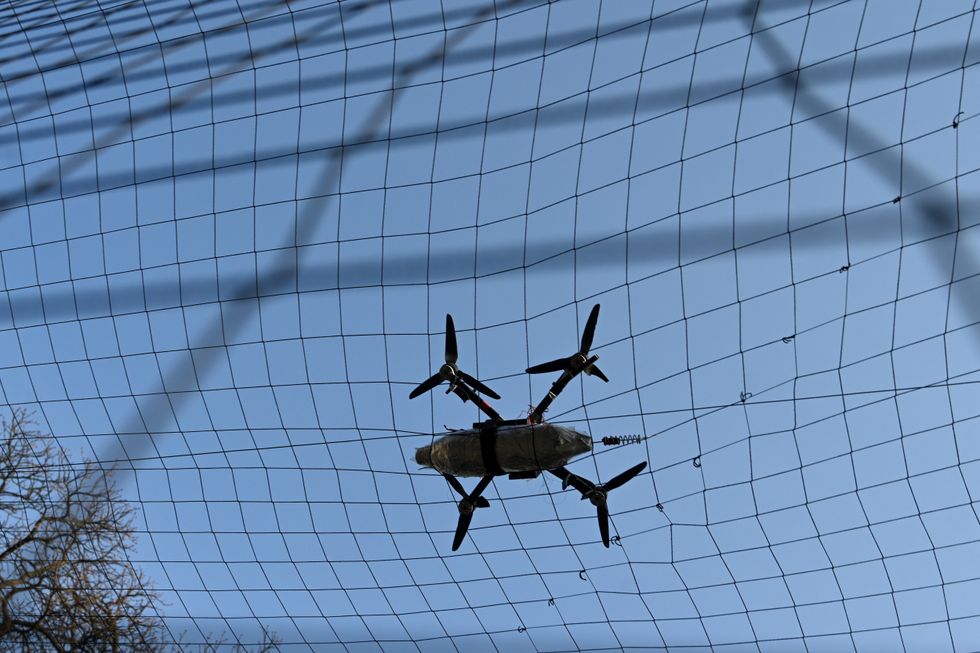
However earlier than testing something, we have to higher describe this RMA. This revolution is the appearance of uncrewed assault and defensive platforms, which take away fight’s proximate danger to people who (a) actively management these uncrewed platforms, or (b) program them to function autonomously. Admittedly, that could be a mouthful. For a revolution of this complexity and significance, we’ll abridge its nomenclature to “drones, codes and spacecraft,” providing three temporary descriptions.
“Drones” confer with uncrewed belongings that function inside the Earth’s ambiance, oceans and land plenty. “Codes” refer broadly to laptop applications that beget their very own assault and protection vectors in our on-line world – or allow understanding, effectivity, and autonomy through the operation of different uncrewed belongings. “Spacecraft” connotes a burgeoning satellite tv for pc constellation of sensors and communication relays that allows all the above. Likewise, the house area supplies a possible assault vector for adversaries who select to violate the Outer House Treaty of 1967.
For a decade following the 1990 Gulf Warfare, scholarship scratched incrementally on the floor of this RMA as our latest warfighting domains of house and our on-line world emerged and matured. Take into account the Fall 1999 Airpower Journal” article by Colin Grey and John Sheldon, “House Energy and the Revolution in Navy Affairs.” Grey and Sheldon, whereas lamenting an overuse of the RMA moniker, cite as many as eight RMAs that vied for tutorial traction between 1991 and 1998. These included revolutions in data warfare, exact intelligence for strike warfare, and knowledge on cyber warfare, air energy, house energy, strategic affairs, safety affairs and political affairs.
Our proposed RMA in “drones, codes, and spacecraft” touches upon a number of of Grey’s listed revolutions, now knowledgeable by three many years of technological improvement and observe. Though the “RMA” moniker misplaced recognition on the flip of the century, whereas the USA led a world warfare towards terrorists corresponding to al Qaeda and ISIS, the time is true to convey again the parlance – significantly given our protection coverage shift towards strategic competitors. In a 2024 Overseas Affairs article, former Chairman of the Joint Chiefs of Employees, retired Military Basic Mark Milley, recognized the appearance of Synthetic Intelligence (AI) and drone expertise as reflective of the change within the character of warfare. As cited earlier, Adamsky cites {that a} change within the character of warfare is, certainly, indicative of an RMA.
We are able to higher choose whether or not this collection appropriately applies “RMA” to using uncrewed and remotely or autonomously managed navy capabilities if we briefly consider this revolution with Marshall’s guidelines:
Command-and-Management (C2): For probably the most prevalent “drones” in our arsenal, the USA Air Power has invested command authorities in Unmanned Aerial Car (UAV) operators who won’t ever be bodily proximate to fight however who can have goal engagement authority (usually delegated by a combatant commander). Whereas proving reluctance is the subject of our subsequent part, the C2 portion of this RMA guidelines does present one early glimpse of sluggishness. Particularly, the USA has delayed public discourse on autonomous (i.e. with out human intervention) positive-identification and goal engagement for drone assaults towards unwitting enemies. That is juxtaposed towards our consolation with defensive autonomy as demonstrated by totally automated modes in Patriot and Aegis ballistic missile protection in addition to Shut-In Weapon Programs on ships. If this RMA runs its course, there could also be fewer commanders making offensive choices in a vertical sequence.
Concerning the “codes and spacecraft” parts of this RMA, the C2 block of Marshall’s guidelines is glad based mostly on the emergence of two associated Combatant Commanders within the final 20 years. Whereas neither United States House Command (USSPACECOM) nor United States Cyber Command (USCYBERCOM) directs bodily contact between human combatants, these four-star commanders exist to direct offensive and defensive makes use of of power. Equally, C2 in these domains is happening at decrease ranges, as house elements and cyber elements (sometimes three-stars and decrease) now have roles within the providers and different geographic and practical combatant instructions.
Organizational constructions: Within the “spacecraft” portion of our proposed RMA, there’s a completely new service (the USA House Power, or USSF) devoted to coaching and equipping these navy members (known as “Guardians”) assigned to the area of house. Their writ is to guard United States pursuits each in house and from house – however with out being bodily positioned within the huge area.
As for “drones and codes,” there are actually designations and profession paths for Unmanned Aerial Automobiles (UAV) pilots and unmanned floor fleet operators, in addition to for Interactive On-Web (ION) professionals, Exploitation Analysts (EA), and cyber architects. Whereas there was congressional debate over whether or not a brand new “Cyber Power” ought to prepare and equip our cyber warriors, there isn’t any equal debate concerning a “Drone Power” – because the Military, Navy, Air Power and Marines select to deal with their drone capabilities as integral parts of maneuver in their very own domains. [Note: the intention to form an Autonomous Warfare Command announced nearly two years after this paper was first penned.]
Doctrine: Doctrine for expertise “from afar” is evolving quickly – significantly for the applying of fashions derived from Synthetic Intelligence (AI) and Machine Studying (ML). There have been Nationwide Safety Memorandums for AI, the Nationwide Geospatial-Intelligence Company (NGA) launched the Division of Protection’s (DoD) first pilot program to accredit AI fashions alongside a risk-continuum. The Accreditation of GEOINT AI Fashions (AGAIM) governs visible fashions and inferences wanted for focusing on, warning, and security of navigation. NGA was the primary protection company to standardize and implement accountable AI coaching for all members of the enterprise who contact AI-related code. As for house, the primary Chief of House Operations, Basic Raymond, thought-about the doctrinal codification of “house management” to be a cornerstone of launching the House Power itself.
Weapons: This RMA could have begun in earnest within the Nineties with the acquisition and utilization of Basic Atomics’ MQ-1 Predator. That platform, with its wing-loaded Hellfire missiles, captured public consideration in Afghanistan throughout Operation Enduring Freedom – solely to present rise to the bigger, extra succesful MQ-9 Reaper. With its longer vary, quicker speeds and heavier fight load, the MQ-9 stays the USA’ UAV workhorse. Uncrewed applied sciences have entered the maritime area as properly, with Unmanned Floor Vessels enjoying Intelligence, Surveillance, and Reconnaissance roles for prolonged intervals. New, distant weapons within the cyber realm are powerful to pin down, as they’re not often confirmed in unclassified annals. Most agree that Stuxnet malware (which reporting suggests was used towards Iran’s nuclear program as early as 2007) grew to become the primary cyber weapon recognized to the general public, though by no means formally acknowledged.
This collection of articles might dedicate appreciable element to every of Marshall’s standards in each aspect of our proposed RMA – however that exceeds our intent of figuring out and diagnosing sources of reluctance. Marshall’s standards are glad for our functions, and we’ll proceed making use of the “RMA” nomenclature to non-proximate fight involving “drones, codes and spacecraft.”
Half Two of this collection focuses on figuring out and testing our reluctance as this particular collection continues all week in The Cipher Transient.
Editorial be aware: That is the primary in a four-part collection from former Nationwide Geospatial-Intelligence Director VADM Frank Whitworth (Ret.) on the reluctant revolution in navy affairs and what it means for future intelligence and protection. This collection of views was tailored from a earlier white paper written by the creator two years in the past, whereas he was on lively responsibility. Learn all 4 components of the collection solely in The Cipher Transient this week and please be aware that the views expressed within the article are these of the creator and don’t essentially characterize the views or endorsement of factual accuracy of the Division of Warfare, the Division of the Navy, or the USA.
The Cipher Transient is dedicated to publishing a spread of views on nationwide safety points submitted by deeply skilled nationwide safety professionals. Opinions expressed are these of the creator and don’t characterize the views or opinions of The Cipher Transient.
Have a perspective to share based mostly in your expertise within the nationwide safety subject? Ship it to Editor@thecipherbrief.com for publication consideration.
Learn extra expert-driven nationwide safety insights, perspective and evaluation in The Cipher Transient
#Reluctant #Revolution #Navy #Affairs #Cipher
Supply hyperlink
