
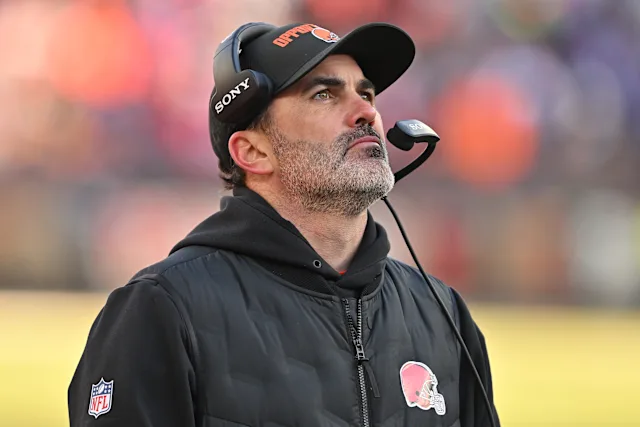

Kevin Stefanski Takes the Helm of the Atlanta Falcons
Kevin Stefanski has officially been named the new head coach of the Atlanta Falcons, just days after parting ways with the Cleveland Browns. His appointment represents a fresh start for a franchise eager to rebound after several years of inconsistent performances. Stefanski’s hiring brings an experienced NFL coach with a track record of both success and resilience to a team in need of direction.
Stefanski’s tenure with the Cleveland Browns lasted six seasons, during which he posted a 45–56 overall record and led the team to the playoffs twice. While he achieved notable milestones, including ending the team’s long playoff drought, the Browns struggled in his final season, ultimately leading to his dismissal. Despite the setbacks, Stefanski remained a highly regarded figure in NFL coaching circles, making him a sought-after candidate for other teams.
The Falcons’ decision to bring Stefanski on board reflects the organization’s desire for a coach who can instill discipline, accountability, and long-term vision. Team executives emphasized his ability to develop players, lead staff effectively, and foster a culture of professionalism and teamwork.
From Cleveland to Atlanta: A New Challenge
After leaving Cleveland, Stefanski quickly became one of the most prominent candidates for head coaching positions in the league. His reputation as a strategic thinker and his accolades—including two AP Coach of the Year nominations—made him an appealing choice for teams seeking leadership that balances innovation with a focus on fundamentals.
Atlanta’s search for a head coach included interviews with several notable candidates, but Stefanski’s experience and leadership style ultimately impressed team management. His appointment signals the Falcons’ commitment to a long-term rebuild and a return to competitiveness in a challenging NFC landscape.
Falcons officials, including President of Football Operations Matt Ryan, highlighted Stefanski’s collaborative approach. They cited his ability to build strong relationships with players and staff as a key factor in fostering a positive environment that emphasizes growth, accountability, and consistent performance.
Leadership and Strategy
Owner Arthur Blank expressed confidence that Stefanski would bring stability and vision to the franchise. He noted that Stefanski’s experience working with both veteran and young players would help guide the Falcons through their rebuilding phase while maximizing the talent already on the roster.
Stefanski himself expressed excitement at the opportunity. He emphasized his eagerness to work with the players, coaches, and staff to implement a system that prioritizes preparation, adaptability, and competitiveness. His leadership philosophy focuses on fundamentals, situational awareness, and fostering a culture where accountability and mutual respect drive team success.
The coach inherits a roster that has experienced its share of highs and lows. Atlanta has struggled to maintain consistency in recent years, failing to make the playoffs for multiple consecutive seasons. Stefanski will need to evaluate the team’s strengths and weaknesses carefully to implement strategies that yield immediate results while also supporting long-term growth.
Roster and Key Challenges
One immediate challenge for Stefanski will be addressing the Falcons’ quarterback situation, which has faced instability due to injuries and inconsistent performances. Balancing the development of young talent with maximizing veteran contributions will be central to his early plans.
The Falcons have also undergone significant front office changes, including the recent departure of their general manager. Stefanski’s arrival marks a key step in the franchise’s broader cultural reset, signaling a commitment to stronger leadership and strategic clarity across both coaching and management.
Additionally, the coach will need to address defensive performance, which has been a weak point for the Falcons in recent seasons. Implementing schemes that improve consistency while leveraging the team’s athletic talent will be a crucial focus for the offseason.
Stefanski’s Career and Experience
Before his head coaching roles, Stefanski spent 14 years with the Minnesota Vikings, where he served in multiple capacities including offensive coordinator and quarterbacks coach. That experience shaped his philosophy of adaptability, preparation, and attention to detail—qualities that have defined his coaching career.
In Cleveland, Stefanski led the Browns to one of their most successful periods in recent history, securing the team’s first playoff win in decades. Despite challenges in subsequent seasons, he gained a reputation for resilience, problem-solving, and strong leadership under pressure.
His coaching style emphasizes collaboration, clear communication, and building systems that allow players to thrive. Stefanski is known for his methodical approach to game preparation and his ability to adjust tactics based on opponents’ strengths and weaknesses.
Expectations for the 2026 Season
The upcoming 2026 NFL season will serve as Stefanski’s first true test with the Falcons. Fans and analysts alike will be watching to see how he integrates into the team, manages personnel, and implements a system that produces results on the field.
Atlanta supporters are hopeful that Stefanski can lead a transformation, bringing both stability and a winning mindset to the franchise. The combination of experienced coaching, strategic planning, and player development will be critical to changing the team’s fortunes.
Stefanski’s appointment also provides an opportunity to attract and retain coaching talent that aligns with his vision. Building a cohesive coaching staff that shares his philosophy will be essential for fostering long-term success.
Looking Forward
The hiring of Kevin Stefanski represents a significant moment in Falcons history, signaling a shift toward strong leadership and renewed competitiveness. With his experience, strategic mindset, and leadership style, he has the potential to guide Atlanta through a rebuilding period and toward sustained success.
As the offseason progresses, attention will turn to how Stefanski addresses roster needs, develops younger players, and integrates his systems across both offense and defense. The success of these efforts will determine how quickly the Falcons can return to playoff contention.
For Stefanski, the move to Atlanta is both a professional challenge and an opportunity to demonstrate the lessons learned from his tenure in Cleveland. Fans, players, and team executives alike will be watching closely as the Falcons embark on a new chapter under their new head coach.
