

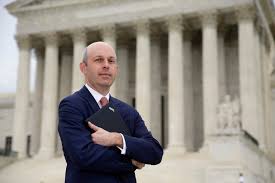
A federal jury has found veteran appellate attorney Thomas Goldstein guilty on multiple criminal counts tied to unreported income from ultra-high-stakes poker games, marking a dramatic downfall for one of Washington’s most recognized Supreme Court litigators.
Goldstein, who argued more than 40 cases before the U.S. Supreme Court and co-founded the widely read legal publication SCOTUSblog, was convicted following a lengthy federal trial in Greenbelt.
The jury determined that Goldstein willfully failed to report millions of dollars in gambling winnings and provided false information on financial documents, including mortgage applications and tax filings.
Millions in Unreported Poker Winnings
Federal prosecutors told jurors that Goldstein participated in elite, high-stakes poker games around the globe, sometimes wagering extraordinary sums in a single session.
According to evidence presented at trial, he earned tens of millions of dollars from poker activities in a single year but did not properly disclose substantial portions of those winnings to federal tax authorities. Prosecutors argued that this failure was not accidental but part of a deliberate effort to evade tax obligations.
The government also alleged that he concealed gambling debts when applying for loans and provided inaccurate financial information to lenders.
Charges and Verdict
After deliberating for approximately two days, jurors convicted Goldstein on 12 of 16 counts.
The convictions included tax evasion, multiple counts of willful failure to pay taxes, false statements on loan applications, and aiding in the preparation of inaccurate tax returns.
He was acquitted on several additional counts, but the most serious charges carry significant potential prison time under federal law.
Sentencing will be determined at a later hearing, where a judge will consider federal guidelines and other statutory factors.
Defense Arguments Rejected
Goldstein testified in his own defense, asserting that any discrepancies in his filings were mistakes rather than criminal conduct.
His legal team argued that he relied on accountants and staff to manage complex financial records and maintained that he did not intentionally violate tax laws.
Prosecutors, however, described a pattern of deliberate misrepresentation designed to shield income and minimize tax exposure.
High-Profile Witnesses
The trial drew national attention, in part due to testimony from Tobey Maguire, who has been associated with high-stakes poker circles. His testimony related to gambling activities and financial dealings connected to the case.
Court proceedings detailed lavish spending habits, luxury purchases, and real estate transactions that prosecutors argued were inconsistent with the income reported to tax authorities.
Legal and Professional Fallout
Goldstein’s conviction represents a stunning reversal for a lawyer long viewed as an elite advocate before the nation’s highest court.
Legal analysts note that convictions involving financial misconduct can have lasting professional consequences, particularly for attorneys whose careers depend on credibility before courts.
Beyond potential incarceration, penalties could include restitution, fines, and asset forfeiture. Federal sentencing considerations may reference standards established by the U.S. Sentencing Commission.
Broader Tax Implications
The case underscores a key principle of federal law: gambling winnings are taxable income.
Under rules enforced by the Internal Revenue Service, individuals must report gambling proceeds, even if losses are later used to offset some of those gains. Failure to accurately disclose such income can result in criminal prosecution, particularly when large sums are involved.
Legal experts say the case sends a strong message that high earnings from unconventional sources — including private poker games — remain subject to the same reporting requirements as traditional income.
Goldstein now awaits sentencing, which will determine the extent of penalties following one of the most closely watched white-collar criminal trials involving a Supreme Court practitioner in recent years.
