

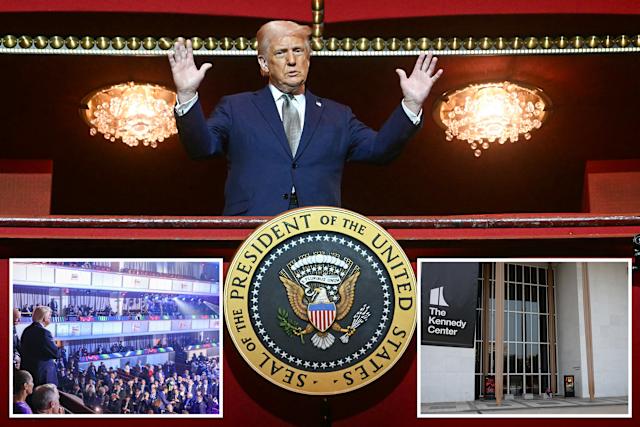
‘Their First Instinct Was to Loot’: How Trump’s Acolytes Are Reshaping the Kennedy Center
When a board dominated by allies of President Donald Trump voted to attach his name to the prestigious Kennedy Center for the Performing Arts, the decision triggered a wave of controversy and upheaval that has reverberated throughout the cultural world.
The storied Washington, D.C. institution — long dedicated to the legacy of President John F. Kennedy and celebrated for its role supporting the performing arts — is now at the center of a fierce debate over politics, artistic freedom, and cultural identity.
Critics of the board’s actions describe the takeover and renaming of the facility as an aggressive move that prioritized political loyalty over artistic mission, a shift they say has caused real harm to the center and its reputation.
The decision to rebrand the venue as “The Donald J. Trump and the John F. Kennedy Memorial Center for the Performing Arts” drew immediate condemnation from members of the Kennedy family, lawmakers, artists, and cultural leaders who argued that altering the name of a federal memorial requires congressional authorization.
At the forefront of the criticism was a scathing remark from a Democratic senator leading an investigation, who said that the impulse from Trump’s supporters “was to loot” a treasured national institution for partisan ends.
Board Overhaul and Leadership Shakeup
Earlier in 2025, President Trump moved to overhaul the Kennedy Center’s leadership by removing longstanding board members and installing his own appointees, consolidating control over decisions about programming and institutional governance.
Richard Grenell, a long‑time Trump loyalist, was named president of the center, an influential role that has allowed him to steer its direction in line with the new leadership’s priorities.
Supporters of the changes argue that they were necessary to refresh an institution they say had become overly politicized by previous management, particularly around social and cultural programming they considered out of step with traditional American values.
Critics, however, see those decisions as a politicization of a cultural institution — replacing diverse artistic voices with programming and policies tailored to a narrower ideological base. They charge that the purge of previous board members and staff, as well as a shift in artistic priorities, has damaged the center’s standing in the arts community.
Wave of Cancellations and Backlash
One of the most visible effects of the controversy has been the cancellation of performances and events by musicians, dance companies, and other artists who withdrew their participation in scheduled shows at the Kennedy Center.
A number of notable figures and groups — including veteran jazz ensembles, contemporary dance companies, and solo performers — chose to pull out of concerts around major holidays and into the new year, leaving gaps in the center’s programming.
This cascade of cancellations has been linked by many observers to the broader backlash against the Kennedy Center’s name change and its broader governance overhaul.
Artists who have canceled appearances often cited their discomfort with the center’s rebranding or changes to its cultural mission, saying they could not in good conscience perform in a venue that they feel no longer represents inclusive artistic values.
Impact on Traditional and Community Programming
The fallout has extended beyond headline gracing concerts, touching a range of programming that once made the Kennedy Center a home for diverse artistic traditions.
Groups that historically performed at the venue — such as the Gay Men’s Chorus of Washington, D.C., and events connected to LGBTQ+ Pride celebrations — have seen their planned appearances quietly removed from the center’s schedule or canceled outright.
Educational and community arts programs have also been affected. One long‑standing partnership with a national college theatre festival, which had been held at the center for decades, was recently suspended, with organizers citing values misalignment with the institution’s new direction.
Even traditional Christmas Eve concerts and New Year’s Eve performances, once cornerstones of the center’s calendar, were canceled as tensions over leadership and identity escalated.
Political and Legal Controversy
Beyond the immediate cultural and artistic backlash, the Kennedy Center’s transformation has opened up broader legal and political conflicts.
Critics, including lawmakers and members of the Kennedy family, have asserted that renaming a federal memorial institution without express congressional authority may violate law or custom intended to protect the legacy and purpose of such places.
Some legislators have vowed to challenge the renaming through legal or legislative means, arguing that protecting historical and cultural landmarks must transcend partisan shifts.
At the same time, the controversy has highlighted how deeply cultural institutions can be pulled into partisan conflict in an era of intense political polarization.
Leadership Response and Defense
In response to criticism and cancellations, the Kennedy Center’s current leadership has defended its actions, framing them as efforts to broaden the scope of artistic expression and realign the institution with a vision they believe appeals to a wider audience.
The center’s president has dismissed complaints as politically motivated and has accused former leadership of booking shows that catered mainly to one ideological segment.
He has also threatened legal action against performers who have withdrawn from appearances, signaling a willingness to engage in disputes over contracts and the financial consequences of canceled engagements.
Supporters within the administration argue that the center has increased programming that aligns with a traditional vision of American culture and that financial sustainability requires curating performances that attract broad public interest.
Financial and Cultural Consequences
Analysts say the Kennedy Center has seen a decline in attendance and viewership in the wake of the turmoil, including notably low ratings for its annual awards broadcast — once a prime showcase of its cultural prominence.
Private ticket sales have suffered as major performances are pulled and audiences react to the evolving identity of the venue.
Some fear that the center’s shift away from its historical role as a broadly inclusive platform for theater, music, and dance may limit its appeal and threaten its long‑term viability as a cultural institution.
There are also concerns that the center’s embrace of far‑right and exclusively conservative programming could further alienate segments of the public and artistic communities.
Voices From the Arts Community
Performers and arts leaders who have stepped away from Kennedy Center engagements have spoken about the importance of artistic freedom and the need for cultural spaces that reflect diverse voices and experiences.
For many, the decision to cancel or relocate performances was a statement about preserving the integrity of artistic institutions and resisting what they view as undue political influence.
Some see the center’s transformation as symbolic of a broader struggle over cultural narratives in the United States — a battle over who controls major institutions and whose voices are elevated or silenced.
Protest events and alternative performances, sometimes organized outside the traditional center site, have highlighted ongoing dissatisfaction and the desire for arts that speak to shared values of inclusivity and expression.
Looking Ahead
As the controversy continues, the Kennedy Center stands at a crossroads, grappling with the immediate impacts of conflict over its identity as well as questions about its future trajectory.
Whether it can recover its standing, attract a full slate of artists, and recapture broad public support remains uncertain.
What is clear is that the dispute over the Kennedy Center has ignited a national conversation about the role of political influence in cultural institutions and the importance of protecting spaces dedicated to artistic exploration free from partisanship.
The coming months will likely see continued debate, legal challenges, and potentially further shifts in how the center operates — all amidst a broader cultural moment in which art, politics, and public identity are increasingly intertwined.
