

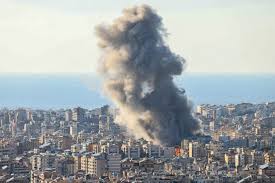
The Middle East plunged into dramatic new levels of warfare as a joint military campaign by the United States and Israel against Iran rapidly ignited violence across the region, involving at least nine countries and threatening broader instability. What began with coordinated strikes has quickly evolved into a multifront confrontation with mounting casualties, widespread disruptions, and deepening geopolitical fault-lines.
Early reports confirm that the U.S.–Israeli offensive targeted key Iranian infrastructure and leadership positions, significantly crippling Tehran’s military command and eliminating senior figures. The intensity of these strikes followed the killing of Iran’s Supreme Leader, which has fueled fierce reprisals from Tehran and its regional allies.
The consequences of this escalation have spread far beyond Iran’s borders, with attacks and counterattacks reported across the Gulf and in neighboring states. Missile barrages, drone assaults, and artillery exchanges have drawn in regional powers, amplifying fears of a prolonged and unpredictable conflict that could reshape Middle Eastern geopolitics.
Widening The Front: Retaliations and Regional Strikes
Iran’s response to the assault has been robust and far-reaching, involving ballistic missiles and unmanned aerial vehicles striking military and civilian sites in multiple countries. Strategic targets have included U.S. military bases, oil facilities, and major urban centers in Gulf states, increasing both military and civilian risk throughout the region.
Several Gulf nations experienced direct impacts from Iranian missile and UAV strikes, forcing authorities to scramble air defenses and, in some cases, evacuate civilians. The United Arab Emirates, Qatar, Kuwait, Bahrain, Saudi Arabia, and Jordan all reported damage from Iranian attacks, underscoring how swiftly the conflict has transcended national borders.
Alongside these broader assaults, Iran’s allied militia groups such as Hezbollah have engaged directly in the conflict, launching rockets toward Israel from Lebanon. Israel responded with targeted strikes against these groups, drawing yet another country deeper into the spiraling violence.
Human and Economic Toll
As the conflict extends, human casualties continue to mount. Iranian authorities have reported hundreds of deaths and injuries among their population, while neighboring states have also recorded civilian harm due to missile debris, intercepted drones, and secondary impacts.
The disruption has gone beyond battlefield losses. Critical infrastructure such as oil production facilities in Qatar was forced to halt operations, exacerbating global supply concerns and driving energy prices sharply higher. International shipping lanes, including the critical Strait of Hormuz, face interruptions that threaten global trade and economic stability.
This has ripple effects on global markets, with analysts warning that rising oil prices could fuel inflation and impact economic growth worldwide. Financial markets have already reacted to heightened uncertainty, and analysts predict further instability if the conflict persists.
Impact on Travel, Transport, and Daily Life
Major disruptions have been felt in international travel as airspace closures and safety concerns prompted cancellations of thousands of flights. Key airline hubs in the Middle East experienced severe shutdowns, leaving travelers stranded and airlines grappling with logistical challenges.
Critical shipping routes are also under increasing threat as naval warnings and attacks near essential maritime corridors interfere with normal operations. The potential closure of these passages could severely impact global trade, particularly for energy exports from the region.
For residents of the region, life has been upended. Sirens, evacuations, and the imminent threat of missile strikes have become daily realities, forcing populations to take shelter and adapt to a new rhythm of fear and uncertainty. Governments across the Middle East have issued alerts urging citizens to exercise caution or leave conflict zones entirely.
Political Dynamics and Global Responses
The leadership in Washington and Jerusalem has justified the offensive as a decisive effort to dismantle what they describe as a looming threat posed by Iran’s missile and nuclear programs. However, this stance has drawn criticism from some world leaders who argue that the military action risks uncontrollable escalation and lacks clear international mandate.
European and regional actors have called for restraint even as some allied nations have provided support or strategic cooperation. Diplomatic efforts to de-escalate continue amid emergency sessions at international forums and urgent communications between global capitals.
Opposition voices within and outside the United States have raised concerns about the potential for a prolonged conflict that could strain military resources, impact future elections, and pull more nations into an open confrontation.
The Long View: What Comes Next?
As hostilities persist, questions about the future trajectory of this crisis loom large. Analysts warn of multiple possible scenarios, ranging from extended stalemate and attrition to broader regional conflagration involving additional state and non-state actors.
Many observers believe that Iran’s capacity to sustain retaliation will be tested over time, especially as its missile reserves and UAV capabilities face depletion under intense pressure from allied air defenses. Similarly, the U.S. and Israeli militaries must balance strategic goals against mounting international scrutiny and logistical demands.
The readiness of global actors to negotiate, impose ceasefires, or seek diplomatic solutions will likely influence how this crisis evolves. For now, the Middle East remains on edge, with millions affected by a conflict whose consequences will reverberate long after the current battles subside.
