

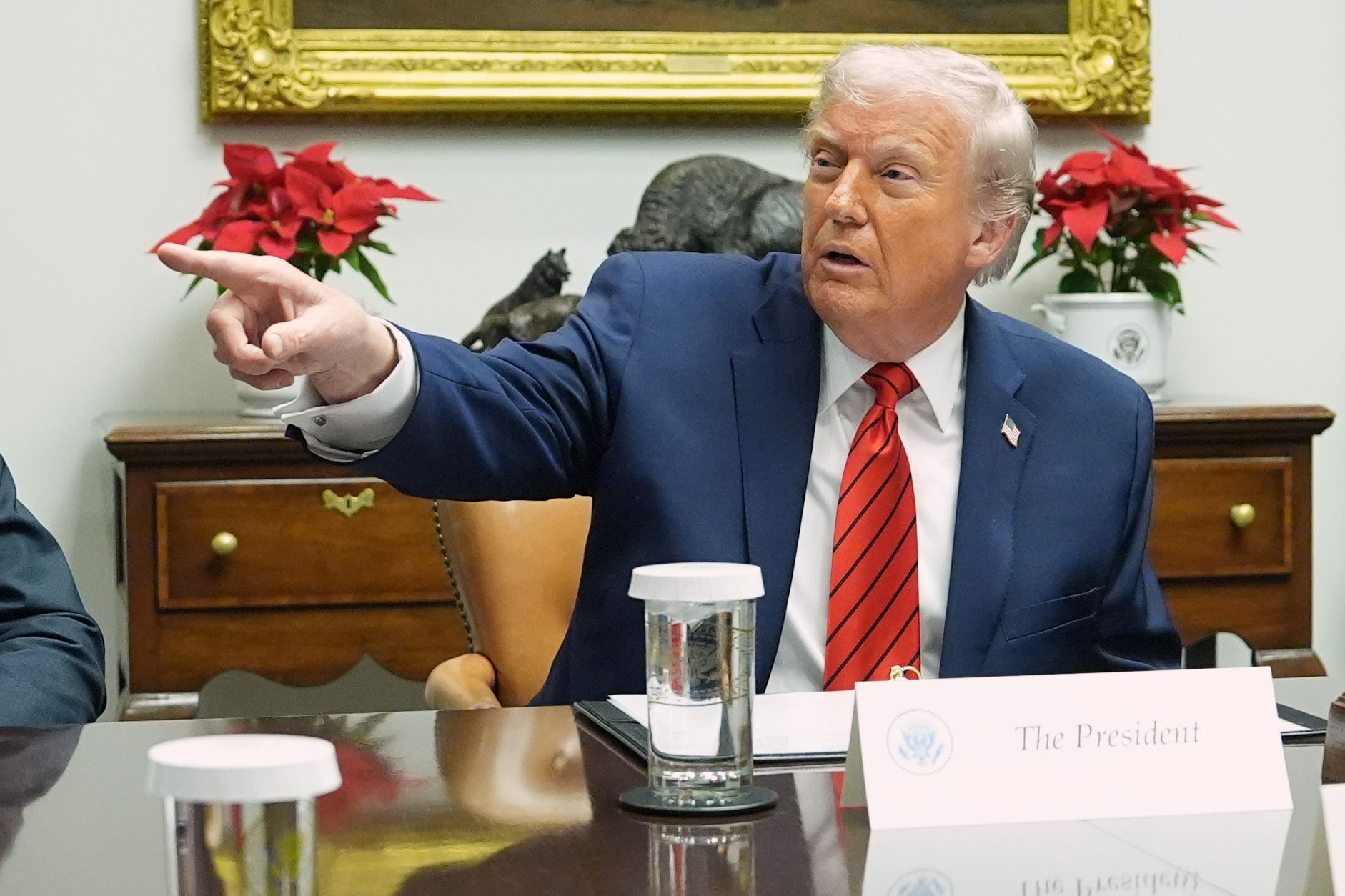
In a wide‑ranging and candid discussion this week, President Donald Trump laid out his worldview on global power, military force and the limits of presidential authority in an interview with a major U.S. newspaper.
The conversation came just days after a dramatic U.S. military operation that removed Venezuela’s president from power and put the country’s oil resources under American oversight, marking a striking shift in Washington’s international posture.
Trump framed his recent decisions and future ambitions in stark terms, suggesting that the only real check on his use of force and influence abroad is his own moral compass rather than established international rules or conventions.
Asked whether any external constraints limit his global authority, the president reiterated that he is guided foremost by his own sense of right and wrong, adding that international law plays little role unless he personally chooses it to.
Trump also made clear that his approach blends raw power with an unorthodox personal style, mixing serious strategic claims with moments of humour and casual asides.
A New Assertiveness on the World Stage
On Venezuela, Trump affirmed that the United States intends to remain deeply involved for the foreseeable future, saying that the country will stay under American influence long after the initial military action. His remarks signalled a departure from traditional diplomatic caution and a willingness to entrench U.S. authority over another sovereign nation.
He described a cooperative relationship with Venezuela’s interim government, and insisted that the U.S. will direct and profit from the nation’s oil industry while also providing funds for local needs.
This unapologetic stance on intervention has drawn criticism from foreign policy analysts who argue that it may undermine long‑standing global norms and fuel tensions with rival powers.
In the same vein, Trump discussed his long‑standing interest in Greenland, a vast Arctic territory, stressing the strategic benefit of outright ownership rather than maintaining it as an allied territory. He suggested that a lease or treaty arrangement would never offer the same advantages as possession.
When pressed on whether securing Greenland should take precedence over maintaining alliances such as NATO, the president declined to choose outright but hinted that traditional alliances are less valuable without unquestioned U.S. leadership.
Trump claimed that NATO is ineffective unless the United States dominates its direction and that European nations ought to “shape up” or risk being left behind.
Taiwan, Nuclear Treaties and Global Risk
On Asia, Trump sought to diminish fears that his actions in Latin America might embolden China to make a military move against Taiwan, saying he believes Beijing will refrain from aggression while he remains in office.
He downplayed comparisons between Venezuela and the Taiwan question, citing distinct regional contexts and asserting confidence that Chinese leaders would avoid conflict during his tenure.
The president also weighed in on arms control, making it clear he would not necessarily renew the last major nuclear treaty with Russia when it expires, though he professed a desire for a broader pact that might include other nuclear powers.
This stance raised alarms among arms control advocates who fear that without limits, the U.S. and Russia could expand their strategic arsenals beyond the constraints of the now‑lapsed agreement.
Trump’s comments underscored his preference for bilateral leverage and strategic flexibility over binding international agreements that might curb American military capabilities.
The president said a future agreement could be superior, particularly if it brought China into the fold, but he offered no firm commitment beyond his stated preference for renegotiation.
Personality, Power and Unconventional Tactics
Throughout the interview, Trump embraced moments of levity and personal reflection, joking about matters ranging from weight‑loss drugs to taking a phone call from a foreign leader in the middle of the discussion.
Reporters noted that the president appeared comfortable weaving humour and off‑the‑cuff remarks into serious geopolitical discourse, blending entertainment with statecraft in a way few modern U.S. leaders have attempted.
Analysts say this combination of braggadocio and strategic posturing reflects a broader effort by the White House to reshape America’s image on the global stage — presenting confidence as a core element of national strength.
Yet, critics argue that such an approach, which places personal judgment above international law and multilateral institutions, risks alienating allies and emboldening adversaries.
Domestically, the interview has stirred debate among lawmakers and commentators about the appropriateness of concentrating so much decision‑making power in the hands of a single individual without clear legislative or judicial checks.
Some veteran diplomats and military experts have expressed concern that sidelining long‑standing norms may make the world less predictable and more volatile, particularly at a time of rising geopolitical competition.
Others, however, applaud Trump’s willingness to challenge traditional constraints and assert American interests more forcefully, suggesting that past administrations were too restrained by legal niceties and bureaucratic caution.
Broader Reactions and Uncertain Futures
Responses to the president’s remarks have been as divided as the broader political climate in the United States, with critics warning of dangerous precedent and supporters celebrating bold leadership.
International partners have offered mixed signals, with some European capitals expressing unease over dismissals of alliances, while other governments quietly reassess their own security plans in light of shifting U.S. priorities.
In Asia, officials are watching Trump’s comments on Taiwan with particular interest, seeking reassurance amid heightened concerns about stability in the region.
At home, the interview has sparked fresh conversations about the role of moral authority versus the rule of law in presidential decision‑making, with civic organizations and legal scholars weighing in on both sides.
While Trump maintains that he seeks to avoid unnecessary harm, his emphasis on personal morality as the primary restraint on power has provoked debate about accountability and the mechanisms that should govern the use of force.
As the administration continues to pursue its assertive foreign agenda, observers both within the United States and abroad will likely scrutinize how these philosophical statements translate into concrete policy actions.
For now, the interview has illustrated a leader unafraid to challenge conventions, unreserved in his ambitions, and unapologetically confident in his own judgment — a combination that will shape discourse on American power for months to come.
