

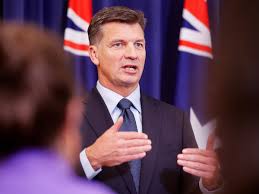
Angus Taylor Reshapes Liberal Frontbench as Party Moves Further Right
Australia’s federal opposition has entered a new political chapter following the elevation of Angus Taylor to the leadership of the Liberal Party of Australia. His rise signals a decisive shift in tone and direction, with conservatives gaining ground and moderates seeing their influence curtailed. The leadership change comes at a crucial time for the party as it seeks to rebuild support after recent electoral setbacks. Insiders say the reshuffle reflects deeper ideological debates that have simmered within the party for years.
Taylor’s victory over Sussan Ley was not just a personal political triumph but a symbolic moment for the party’s right faction. Supporters describe the outcome as a mandate to pursue clearer conservative principles and sharpen policy contrasts with the government. Critics within the party, however, argue that sidelining moderate voices could narrow the Liberals’ appeal in key metropolitan electorates. The internal contest has therefore reshaped both leadership and long-term strategy.
In the days following the ballot, Taylor moved quickly to reorganize the frontbench, rewarding allies who share his policy priorities. Several figures aligned with the party’s conservative wing were elevated into senior roles, signaling a consolidation of ideological direction. At the same time, some MPs associated with Ley’s more centrist approach were reassigned or left without prominent portfolios. The recalibration demonstrates Taylor’s intent to leave a clear imprint on the party’s structure.
The leadership overhaul has sparked renewed discussion about the Liberal Party’s identity in contemporary Australian politics. For years, tensions have existed between those advocating pragmatic centrism and those pushing for firmer conservative positioning. Taylor’s ascent appears to resolve that debate, at least temporarily, in favor of the latter camp. Whether that resolution strengthens unity or deepens division remains to be seen.
Conservative Priorities Take Center Stage
Under Taylor’s direction, economic management has been framed as the party’s defining strength. He has emphasized fiscal restraint, tax competitiveness, and reducing regulatory burdens on businesses. According to supporters, this approach will reinforce the Liberals’ traditional economic credentials. The messaging is designed to contrast sharply with the policies of the governing Labor administration.
Energy and climate policy are also expected to undergo a noticeable shift in emphasis. Taylor has questioned aspects of Australia’s pathway toward net-zero emissions, arguing that affordability and reliability must remain paramount. This perspective aligns with conservative members who believe previous approaches placed undue strain on households and industries. The debate over energy policy is likely to become a central battleground in parliament.
Immigration settings have similarly emerged as a priority area for the new leadership team. Taylor and his allies have voiced concerns about housing pressures and infrastructure strain linked to population growth. They argue that recalibrating migration levels is necessary to ensure sustainable development and economic stability. Such proposals are expected to feature prominently in opposition messaging.
Cultural and social issues may also see greater attention under the reconfigured frontbench. Some conservative MPs have advocated for stronger positions on national identity and community cohesion. By elevating these voices, Taylor signals a willingness to engage more directly on topics that resonate strongly with sections of the party base. This shift could energize supporters while provoking debate among critics.
Moderates Marginalized as Internal Dynamics Shift
The diminished presence of Ley’s allies in senior roles marks a turning point in factional balance. Moderates who previously played key roles in shaping policy direction now find themselves with less influence over the party’s agenda. While some have pledged loyalty to the new leadership, others are quietly concerned about the long-term electoral implications. The internal recalibration reflects both strategic calculation and ideological conviction.
Observers note that urban electorates, particularly those lost in recent elections, were often represented by moderate Liberals. The decision to prioritize conservative figures could complicate efforts to win back those seats. However, Taylor’s supporters argue that a clearer message is more effective than attempting to appeal broadly without a defined identity. The coming electoral cycles will test which strategy proves more persuasive.
Within party ranks, there is also debate about generational change and renewal. Some younger MPs have embraced the shift, seeing it as an opportunity to redefine the party’s narrative. Others worry that an overt move to the right risks alienating emerging voter demographics. The leadership transition therefore intersects with broader questions about the Liberal Party’s future direction.
Political analysts suggest that maintaining unity will be one of Taylor’s greatest challenges. Leadership contests often leave lingering tensions, even when the result appears decisive. Successfully integrating different factions into a cohesive opposition strategy will require careful management. The ability to balance conviction with inclusivity may determine the party’s stability.
Electoral Strategy and the Road Ahead
Looking forward, Taylor’s task is to translate internal consolidation into public support. A reorganized frontbench provides structural clarity, but electoral success depends on connecting with voters beyond the party faithful. Crafting policies that resonate across diverse communities will be essential. The opposition must demonstrate not only ideological coherence but practical relevance.
Parliamentary performance will also shape perceptions of the new leadership. Strong debate, disciplined messaging, and credible policy alternatives can enhance the Liberals’ standing as a government-in-waiting. Conversely, visible factional friction could undermine confidence among undecided voters. The coming parliamentary sessions will therefore serve as an early test of Taylor’s authority.
Grassroots reaction has been mixed but engaged. Conservative members express optimism that the party has rediscovered a firm sense of purpose. Meanwhile, some centrist supporters urge caution and advocate for continued outreach to moderate Australians. This dynamic underscores the complexity of managing a broad political coalition.
Ultimately, the reshuffle under Angus Taylor represents more than a routine leadership change. It signals a redefinition of priorities and power structures within the Liberal Party. As Australia’s political landscape evolves, the party’s ability to adapt while preserving unity will be critical. The months ahead are likely to reveal whether this rightward shift strengthens the Liberals’ prospects or reshapes their identity in unexpected ways.
