

Somalis Condemn Trump’s Insults as Offensive, Though a Few Say His Harsh Words Exposed Painful Realities
MOGADISHU, Dec 3 (Foxton News) — Somalis across the country expressed anger and disbelief on Wednesday after former U.S. President Donald Trump made a series of derogatory remarks about Somalis and their homeland. While the overwhelming reaction was condemnation, a small number of citizens acknowledged that, despite his abrasive tone, some of his comments pointed to frustrations they themselves hold about governance and insecurity in the nation.
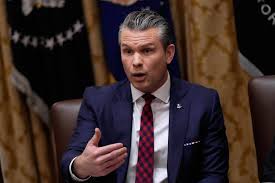
Trump’s remarks came during a cabinet meeting in Washington on Tuesday, where he referred to Somalis as “garbage” and declared, “we don’t want them in our country.” He went on to claim that Somalis “just run around killing each other,” dismissing the nation with the sweeping statement: “their country stinks.” The comments followed a long history of inflammatory language from Trump, aimed at minorities, immigrants, and foreign nations.
For many Somalis, the latest outburst crossed yet another line.
Outrage and disbelief on the streets of Somalia
Residents throughout Mogadishu and other regions reacted with a mixture of fury, sadness, and exhaustion. After decades of war, political crises, and foreign stereotypes, Trump’s words were seen as both demeaning and deeply irresponsible.
Abdisalan Omar, a respected elder from central Somalia, said he was stunned by the former U.S. leader’s vulgar phrasing.
“The world should respond,” he insisted. “A president who speaks like this does not serve the United States or the international community.”
Omar argued that such rhetoric fans prejudice and undermines global cooperation at a moment when Somalia continues to rebuild its institutions and fight the longstanding insurgency posed by al Shabaab.
This was not the first time Trump had targeted Somalis. His comments came on the heels of a fatal shooting in Washington, D.C., in which two National Guard members were killed. Although an Afghan national—not a Somali—was later charged with the crime and pleaded not guilty, Trump immediately used the incident to amplify his attacks on immigrants from African countries and renew his pledge to halt migration from what he called “third-world nations.”
The repetition of Trump’s remarks throughout Somali media and social platforms fueled the public’s frustration. Many Somalis interpreted the statements not merely as political rhetoric but as personal insults aimed at their identity, culture, and shared struggles.
Prime Minister urges restraint: “Better to ignore him”
Somalia’s Prime Minister, Hamza Abdi Barre, offered a measured response during an address at an innovation summit in Mogadishu. Without singling Trump out by name, Barre noted that the former president had a history of insulting multiple nations across Africa.
“Trump has insulted many countries, including Nigeria and South Africa,” Barre said. “There are things that do not need a response. Sometimes it is better to ignore such statements than to elevate them.”
His tone reflected a diplomatic balancing act: pushing back against harmful rhetoric without turning the issue into a political confrontation that could overshadow Somalia’s local priorities. Barre’s approach was applauded by some officials who argued that Somalia’s leadership should focus on national development rather than foreign provocations.
Somalis in the U.S. also targeted
Trump’s escalation extended beyond words. A month earlier, he declared his intention to end temporary deportation protections for Somalis living in Minnesota, a state with one of the largest Somali diaspora communities in the world. He blamed “Somali gangs” for what he described as widespread violence in the state—allegations that local officials and community leaders said were exaggerated or entirely inaccurate.
Such claims have left members of the Somali diaspora concerned not only about deportation threats but also about the broader impact on public opinion. Many fear that the repeated narrative portraying Somalis as criminals fuels discrimination, harassment, and profiling in American communities.
A country still grappling with instability
Somalia has faced more than three decades of conflict, political turmoil, and humanitarian crises. Despite ongoing reforms and efforts to restore governance, the nation continues to confront serious security challenges from al Shabaab, the al Qaeda-linked militant group that has carried out attacks for nearly twenty years in its attempt to destabilize the central government.
These ongoing struggles create a painful context in which Trump’s remarks land with particular force. For many Somalis, the comments felt not only insulting but dismissive of the enormous sacrifices made by civilians, security forces, and local leaders who continue to work toward stability.
Some Somalis say Trump’s bluntness reflected their frustrations
Although condemnation dominated reactions, not all Somalis dismissed Trump’s words entirely. A small group of residents, fed up with corruption, insecurity, and economic stagnation, said they believed his remarks—while offensive—touched on truths about governance failures.
Samira Abdullahi, a Mogadishu resident who lost her land in a government expropriation, said she was not surprised by Trump’s harsh judgment.
“Trump spoke the truth, but he used unpleasant words,” she said. “We have no real government. Al Shabaab bombs and steals from Somalis, and the people suffer.”
Her perspective reflected a growing sentiment among some citizens who believe Somalia’s leadership must take greater responsibility for the country’s internal problems. For them, the issue was less about Trump himself and more about the conditions that make such criticisms possible.
How Trump’s rhetoric reverberates internationally
Trump’s comments carried implications far beyond U.S.–Somali relations. His approach toward African nations had often drawn condemnation from global partners, humanitarian organizations, and immigrant communities. Critics argue that derogatory language from a former U.S. president can strain diplomatic relationships, embolden extremist narratives, and contribute to xenophobia both within the United States and abroad.
For Somalis, the remarks reopened long-standing frustrations concerning how the world perceives their country. Many citizens worry that comments like these perpetuate harmful stereotypes that overshadow the resilience, entrepreneurship, and cultural richness present across Somali society.
Some analysts also warned that inflammatory rhetoric could complicate U.S. cooperation with Somalia on counter-terrorism, development, and humanitarian aid—areas where strong partnerships are crucial.
Social media erupts with criticism and calls for dignity
On Somali social media platforms, hashtags condemning Trump’s language trended throughout Wednesday. Users shared videos, commentary, and satire in response to the remarks. Many accused Trump of racism, while others expressed disappointment that such language continues to gain traction among political figures in major Western nations.
Some Somali Americans used the moment to highlight how anti-immigrant rhetoric affects their daily lives, from employment opportunities to community relations. Others called for solidarity between Somalis abroad and those in Somalia.
Despite the turmoil, several voices urged caution and calm. Somali scholars and journalists emphasized the importance of focusing on national progress rather than external provocations. They noted that while Trump’s language was inflammatory, Somalia’s internal challenges—governance reform, economic development, and security—remained pressing priorities that required unity.
A nation determined not to be defined by insults
For many Somalis, the controversy served as a reminder of how far their country still has to go on the path toward stability, recognition, and dignity on the world stage. But it also reinforced a collective resolve: that Somalia’s future should be shaped by its people, not by derogatory remarks from foreign leaders.
Community elders, youth activists, and civic groups called on Somalis to reject divisive rhetoric and continue working toward peace and reconstruction. Several commentators noted that the nation has survived far worse than hurtful words, and that its strength lies in the resilience and determination of its citizens.
Conclusion: Anger, reflection, and a renewed call for change
Donald Trump’s remarks sparked widespread anger across Somalia, and for good reason: they were crude, sweeping, and dismissive of a country still battling to rebuild itself. Yet the controversy also ignited a deeper conversation within Somalia about governance, identity, and the long road toward stability.
The overwhelming reaction was one of condemnation—an insistence that Somalis deserve respect and dignity on the world stage. But amid the outrage, a few voices acknowledged that some of the country’s painful realities cannot be ignored and that Somalia’s leaders must continue to prioritize reforms that address corruption, insecurity, and social inequality.
Whether dismissed as offensive rhetoric or viewed as a harsh mirror reflecting internal challenges, Trump’s comments have forced Somalis once again to confront the tension between global perception and national aspiration. And for many, the response is clear: Somalia’s future will be defined not by foreign insults but by the work its people continue to do every day to build a better nation.
