
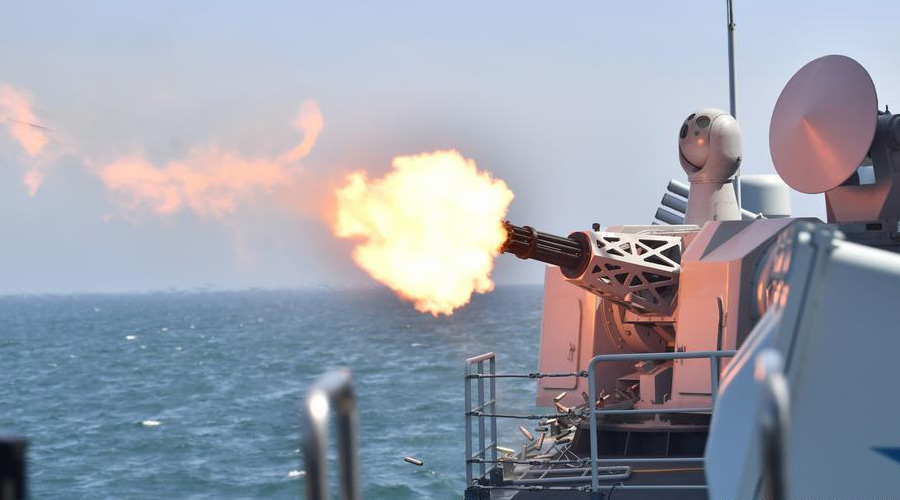

China launches live-fire military drills encircling Taiwan
China has launched large-scale live-fire military drills encircling Taiwan in a show of force that has intensified tensions across the Taiwan Strait and drawn close scrutiny from regional and global observers.
The exercises involve multiple branches of China’s military, including the army, navy, air force, and rocket forces, marking one of the most coordinated and expansive operations conducted near Taiwan in recent years. Chinese authorities framed the drills as a response to what they described as growing separatist sentiment in Taiwan and increasing foreign involvement in the region.
Scope and objectives of the drills
According to official statements, the drills focus on joint combat readiness, precision strike capabilities, and coordination across land, sea, air, and missile forces. Military units were deployed in positions surrounding Taiwan, simulating scenarios such as blockades, rapid response operations, and targeted strikes on strategic assets.
Chinese officials emphasized that the exercises are intended to test the People’s Liberation Army’s ability to conduct integrated operations under realistic combat conditions. The drills also include live-fire components, signaling Beijing’s intent to demonstrate both readiness and resolve.
Temporary restrictions were placed on airspace and maritime zones near Taiwan to accommodate the exercises. These restrictions affected major shipping lanes and flight paths, raising concerns among regional aviation and maritime authorities about safety and potential disruptions to international trade.
Taiwan’s response and regional concerns
Taiwan’s government swiftly condemned the drills, calling them reckless and destabilizing. Officials in Taipei accused Beijing of escalating military pressure and undermining peace in the region, arguing that the exercises threaten civilian safety and regional stability.
Taiwan’s defense ministry confirmed that it activated monitoring mechanisms and deployed naval and air patrols to track Chinese movements. Military officials stated that Taiwan’s armed forces remain prepared to defend the island while avoiding actions that could unnecessarily escalate the situation.
Beyond Taiwan, neighboring countries have expressed unease about the growing frequency and scale of military activity near the island. Regional governments worry that sustained pressure could increase the risk of accidents or miscalculations, particularly in heavily trafficked international waters.
Broader geopolitical implications
The drills come amid already strained relations between China and several Western countries, particularly the United States, which maintains unofficial ties with Taiwan and supplies it with defensive weapons. Beijing views these relationships as direct challenges to its sovereignty claims and frequently responds with diplomatic protests and military demonstrations.
Analysts suggest that the exercises serve multiple purposes beyond immediate military training. They reinforce Beijing’s domestic narrative of strength, send a warning to Taiwan’s leadership, and signal to international audiences that China is willing and able to assert its claims through force if necessary.
China has repeatedly stated that it prefers peaceful reunification with Taiwan but has not ruled out the use of military force. The increasing scale of drills is widely seen as part of a long-term strategy to normalize military presence around Taiwan and gradually shift the strategic balance in Beijing’s favor.
In Taiwan, the drills have reignited public debate about defense preparedness, civil resilience, and the island’s future relationship with China. While anxiety has grown among some residents, others see the response of Taiwan’s military as reassurance that the island remains capable of defending itself.
International calls for restraint have continued, with many governments urging dialogue and caution. Diplomatic efforts to reduce tensions remain limited, however, as core disagreements over sovereignty and political status persist.
As the exercises continue, military experts note that each new round of drills adds to China’s operational experience and increases pressure on Taiwan’s defenses. Whether this escalation leads to renewed dialogue or further confrontation remains uncertain.
What is clear is that China’s live-fire drills have once again placed Taiwan at the center of a widening geopolitical contest, one that extends beyond the region and carries significant implications for global security and stability.
