

Deadly Drone Strike Reported Amid War and Peace Talks
Russian-installed authorities in occupied southern Ukraine reported that at least 24 people were killed by a drone strike on New Year’s Eve, with dozens more wounded as celebrations unfolded in a local village.
Officials in the Kherson region said three unmanned aerial vehicles (UAVs) hit a café and a hotel in the coastal settlement of Khorly just before midnight, where civilians had gathered to ring in the New Year.
The local leader appointed by Moscow said one of the drones carried an incendiary mixture that caused a fire at the site, contributing to the casualty toll and injuries among those present.
Along with the fatalities, authorities reported that more than 50 people were wounded, including individuals with serious burns and trauma, and emergency services were still treating survivors in the early hours of the new year.
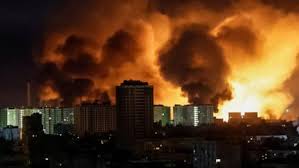
Images and messages circulated by the regional administration were presented as evidence of the aftermath, showing buildings damaged by fire and debris on the ground.
Claims and Denials in Ongoing Conflict
Russian officials immediately accused Ukrainian forces of conducting the attack intentionally, calling it an assault on civilians during a time of celebration.
The Kremlin-appointed governor alleged that the strike was deliberate, asserting that drones targeted a location known to be hosting a New Year’s gathering.
Ukrainian authorities, however, have not confirmed responsibility for the strike, and have not issued an immediate comment on the specific incident.
Independent verification of the claims has not been possible, and the information remains based largely on statements from the occupying authorities and Russian representatives.
The absence of a clear confirmation from Ukraine has fueled debate about what actually occurred and raised questions about the accuracy of early casualty reports.
Wider Escalation and War Context
The alleged drone attack comes against the backdrop of nearly four years of conflict between Russia and Ukraine, which has seen frequent use of drones by both sides as part of their military strategies.
In recent months, both Ukrainian and Russian forces have intensified aerial operations, with drones being used to strike military sites as well as, according to some reports, civilian infrastructure.
The use of unmanned systems has added a new dimension to the conflict, allowing strikes at greater distances and often making it harder to determine responsibility for individual attacks.
This latest incident in Kherson followed reports that air defense systems intercepted other drone activity across the region on New Year’s Eve, although details about those engagements remain sparse.
Impact on Civilians and Local Communities
Residents of Khorly and the surrounding area were reported to have been celebrating with food, music, and communal gatherings when the explosions occurred, turning what should have been a festive night into chaos and tragedy.
Some of the injured were described as having suffered burns and shrapnel wounds, and local medical personnel were pressed into treating a sudden influx of patients.
Witnesses said that the fire spread quickly through the café and hotel structures due to the flammable material carried by one of the drones, intensifying the emergency response required.
Family and friends of the victims were left in shock as they searched for missing loved ones amid the ruins of the damaged buildings.
Local emergency services said they were still working to recover bodies and secure the scene in the early hours after the attack.
Political Reactions and Accusations
Russian officials condemned the strike in strong terms, with several senior voices saying it demonstrated the need for continued military pressure.
One prominent political figure described the attack as proof that their objectives in the conflict remained vital, and that concessions on the ground would risk more such violence.
Calls from Moscow echoed a narrative that the drone strike had strengthened their resolve to pursue war goals, framing the incident as justification for their ongoing military presence.
At the same time, Russian leaders pointed to unrelated allegations of Ukrainian attacks on Russian territory to reinforce their claims about the nature of Kyiv’s tactics.
Ukrainian representatives have dismissed some of Russia’s broader accusations as misleading and aimed at undermining ongoing diplomatic efforts.
Peace Talks Under Strain
The reported strike came while peace negotiations between the two sides were moving forward, with officials from Ukraine, Russia, and Western partners engaging in discussions about a potential ceasefire and longer-term stability.
Despite optimistic statements from some diplomats that a deal was close to being finalized, the renewed violence has cast doubt on the prospects for an immediate breakthrough.
Ukrainian President Volodymyr Zelenskyy had recently spoken of progress in talks and suggested that much of the framework for an agreement was in place, though key sticking points remained.
The resurgence of deadly incidents like the New Year’s strike threatens to derail the fragile momentum that had been building around the negotiations.
Observers noted that conflict dynamics often shift dramatically around diplomatic efforts, and that high-profile attacks can quickly undo gains made at the negotiating table.
International and Regional Implications
News of the strike drew attention from global capitals, with foreign officials monitoring how it might affect broader regional stability.
Some Western leaders expressed concern about the impact of continued violence on civilians and emphasized the importance of protecting non-combatants in any military engagement.
Humanitarian groups also renewed their calls for increased support to those affected by the conflict, pointing out that families in eastern and southern Ukraine continue to bear the brunt of hostilities.
There were growing fears that if peace talks falter entirely, the conflict could escalate further into 2026, bringing with it more casualties and destruction.
International aid organizations warned that resources in war-torn regions are already stretched thin, and that another surge in fighting would exacerbate existing vulnerabilities.
Uncertainty Over Evidence and Attribution
One of the most contentious aspects of this episode is the question of accountability, with Russian officials attributing blame to Ukrainian forces, while independent verification has not yet been established.
Because the area is under Russian control, foreign journalists and independent observers have limited access, making it difficult to confirm details on the ground.
Both sides have a history of offering conflicting narratives about events during the war, and this latest incident appears no different.
Specialists in conflict reporting caution that early casualty figures and descriptions of events often change as more information becomes available, and urge patience until further investigation is possible.
Analysts also emphasize the need to distinguish between verified facts and official statements that may be shaped by strategic communication goals.
Human Cost and Broader Consequences
Beyond the political and military implications, the reported deaths and injuries highlight the human cost of prolonged conflict.
Communities like Khorly, far from the front lines, have increasingly found themselves at risk as both sides employ long-range systems such as drones in their operations.
Families who once enjoyed peaceful village life now face the stark reality of war intruding into their homes and celebrations.
Grief and trauma among survivors were palpable in early reactions, with many expressing anger, disbelief, and sorrow at losing loved ones in what should have been a peaceful moment.
For humanitarian workers, the challenge remains to provide not only physical care but also psychological support to those affected by sudden, violent loss.
Looking Ahead
As investigations continue and the international community watches closely, questions remain about how events like this will shape the next phase of the conflict.
If confirmed, the strike could influence public opinion on both sides and affect how future negotiations are framed.
Some observers suggest that unless there is a concerted diplomatic push backed by enforceable guarantees, such violent episodes may continue to punctuate the war.
For now, residents of Kherson and other contested regions must cope with the immediate aftermath, even as politicians and generals deliberate in distant capitals.
The coming days and weeks may reveal whether this tragic event becomes yet another tragic chapter in the war, or a catalyst for renewed efforts toward peace.
