
Gen Z Slang ‘6-7’ Tops 2025 List of Overused Words
A quirky phrase that exploded online last year has been named the most overused word or expression of 2025, according to the latest annual survey.
The expression “6‑7” claimed the top spot on the 50th annual “Banished Words List,” a tongue‑in‑cheek compilation of overused, misused, or meaningless words and phrases compiled by Lake Superior State University.
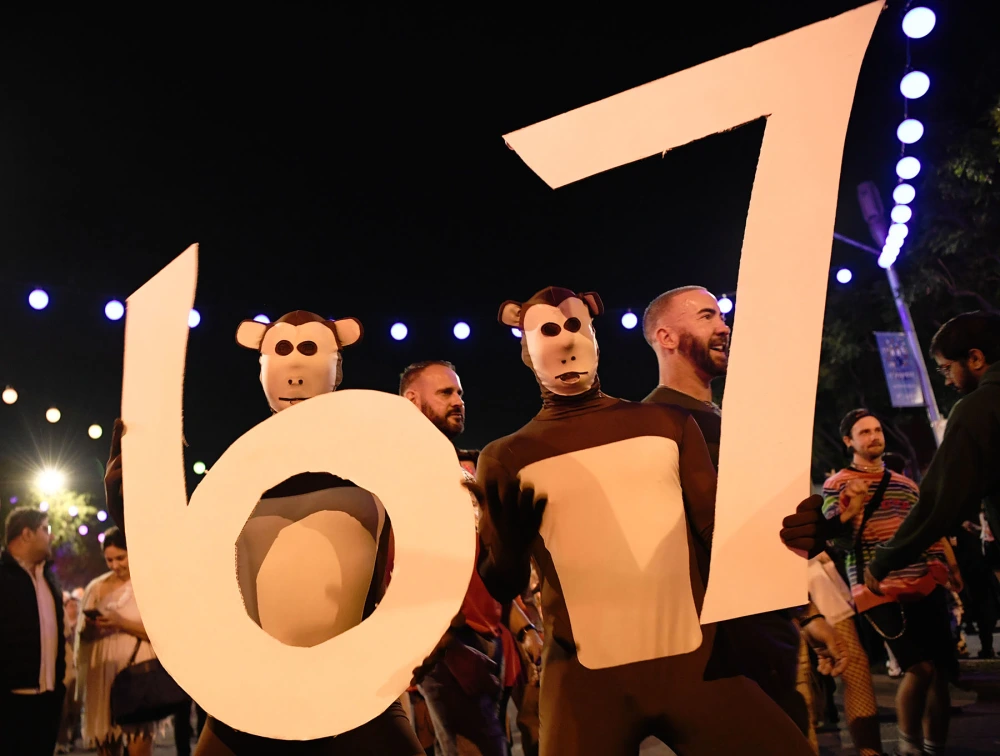
What began as a playful recording on social media quickly became a viral sensation among younger people, yet puzzled many outside that generation who struggle to understand the appeal.
Officials who compile the list say “6‑7” is considered “cooked,” suggesting it should be retired and replaced with fresher language heading into the new year.
The Banished Words List has been released every year since 1976, originally as a humorous New Year’s Eve party idea before becoming a widely anticipated tradition.
This year’s list drew around 1,400 submissions from across all 50 U.S. states and several countries abroad, reflecting diverse opinions about language trends and misuse.
What Does ‘6‑7’ Mean?
Despite its popularity, the phrase does not have a clear or universally agreed‑upon definition.
Dictionary editors selected “6‑7” as its 2025 Word of the Year, though even they admitted that the exact meaning remains unclear.
Some users simply embrace its silliness and rhythm, using it casually in chats, captions, and memes without any literal intent.
The numbers can be read together as “six, seven” or combined as the numeral 67. At times, cultural references like sports scores have helped propel its visibility even further.
For many adults, especially those outside the Gen Z cohort, the term seemed baffling or even irritating as it spread widely online.
The trend prompted discussions about how internet culture can generate and sustain phrases that have little meaning beyond being catchy or viral.
Other Words and Phrases That Made the List
Alongside “6‑7,” several other common words and expressions landed on the list of overused terms.
Included among the most popular entries were words such as “demure,” “incentivize,” “perfect,” and “gift/gifted.”
Phrases like “my bad” and “reach out” also appeared, even though they had been featured on earlier lists decades ago, in 1998 and 1994 respectively.
Some contributors to the list argued that these terms have outworn their usefulness and should be dropped from everyday speech.
At the same time, other linguists and observers suggest that a word’s frequency of use isn’t necessarily a reason to criticize it.
Language in the Digital Age
The university president who oversees the Banished Words List noted that digital communication has played a major role in spreading slang and casual language quickly.
He pointed out that texting, social media posts, and memes often lack context like tone or body language, making misuse or misunderstanding more common.
This environment allows certain expressions to become wildly popular, even if only a small group understands them, because they are shared rapidly and widely.
For younger generations, particularly Gen Z, language is viewed as playful and ever‑changing, evolving with trends just as fashion or music does.
Older generations, on the other hand, sometimes see these trends as confusing or even meaningless, though many established phrases remain in use across ages.
Public Reactions to the Banished List
Some people embraced the list’s lighthearted spirit, seeing it as a fun reflection of how language changes over time.
One university student said she enjoys saying “6‑7,” even if she doesn’t fully understand it, because it adds a bit of amusement to everyday conversation.
Another student said he doesn’t use the phrase at all and doesn’t see the humor in it, but acknowledged that other trending terms have their place.
Some linguists warn against dismissing all viral expressions outright, arguing that slang is a natural and creative part of language evolution.
They note that terms once considered fleeting can sometimes endure or shift meaning over time, becoming more deeply embedded in everyday speech.
Looking Ahead
While “6‑7” tops the 2025 list of overused terms, experts believe its time in the spotlight may be short‑lived.
The university president predicted that the phrase might fade from common use by next year as new slang emerges and cultural focus shifts.
Meanwhile, other expressions on the list, like “my bad,” have shown resilience and are likely to remain part of everyday language for years to come.
The continuing conversation about how and why certain words become popular — or tiresome — highlights the dynamic nature of language itself.
As digital platforms continue to shape how people communicate, new phrases will undoubtedly rise and fall in prominence with each passing year.
For now, “6‑7” stands as a symbol of how playful, confusing, and rapidly evolving online language has become in the modern era.
