
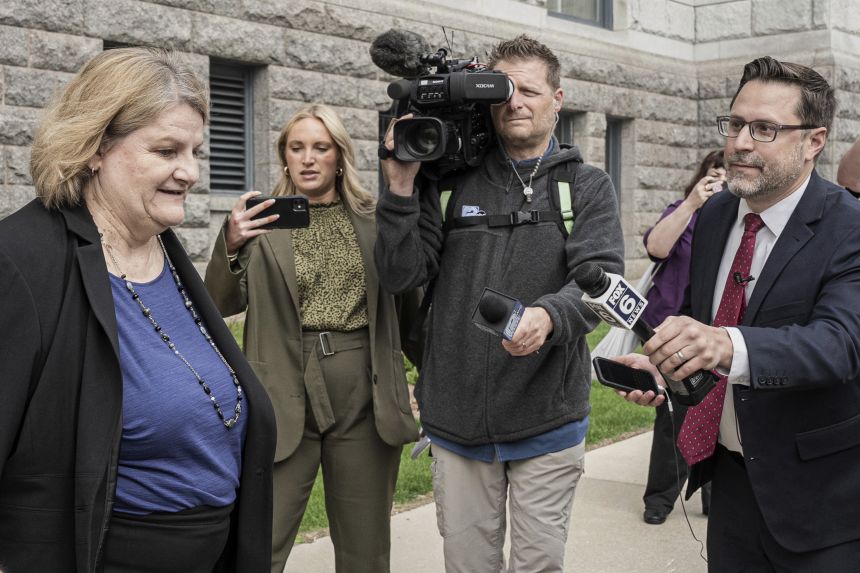

A Wisconsin circuit court judge has resigned from office after being convicted in federal court of obstructing an immigration arrest, bringing a controversial legal and political chapter to a close.
Judge Hannah Dugan, who served on the Milwaukee County Circuit Court, submitted her resignation following a jury verdict that found her guilty of interfering with federal law enforcement officers during an attempted arrest by immigration authorities.
Her departure comes after weeks of public scrutiny, legal debate, and escalating pressure from state lawmakers who questioned whether she could continue serving while appealing her conviction.
The Incident That Led to Conviction
The case centered on an incident that took place at a Milwaukee courthouse last year, when federal agents arrived to detain an undocumented immigrant following a court appearance.
Prosecutors argued that Judge Dugan deliberately impeded the arrest by misleading Immigration and Customs Enforcement officers about the individual’s whereabouts. According to trial testimony, she redirected agents away from the courtroom and facilitated the individual’s exit through a secured area of the courthouse.
The immigrant, later identified as Eduardo Flores-Ruiz, briefly evaded custody before being apprehended elsewhere in the building. Federal officials maintained that the judge’s actions caused unnecessary delay and placed officers at risk.
Following his arrest, Flores-Ruiz was processed on unrelated charges, served a short sentence, and was later removed from the United States.
Defense and Jury Verdict
Throughout the proceedings, Judge Dugan denied acting with criminal intent. Her legal team argued that she was performing her judicial duties and ensuring that federal agents complied with courthouse procedures and legal requirements.
The defense emphasized that judges have an obligation to protect the integrity of court operations and the rights of individuals appearing before them. They claimed her actions were mischaracterized and politicized.
Despite those arguments, a federal jury returned a guilty verdict in December, convicting her of obstruction of justice. The verdict marked a rare instance of a sitting judge being criminally convicted for conduct related to immigration enforcement.
Resignation and Political Fallout
In her resignation letter to Wisconsin’s governor, Dugan stated that continuing to serve while pursuing an appeal would distract from the work of the court and further politicize the judiciary.
She expressed concern that the ongoing controversy could undermine public confidence in the legal system and said stepping aside was in the best interest of Milwaukee County residents.
Her resignation came amid threats from Republican lawmakers who had announced plans to initiate impeachment proceedings if she remained in office. Legislative leaders argued that a convicted judge could not credibly continue to uphold the law.
Supporters of Dugan, however, described the prosecution as excessive and warned that criminalizing judicial discretion could have chilling effects on the independence of courts nationwide.
Career and Background
Judge Dugan was first elected to the Milwaukee County Circuit Court in 2016 and had built a reputation as a progressive jurist focused on fairness and access to justice.
Before joining the bench, she held leadership roles within Wisconsin’s legal community, including serving as president of the local bar association. She also worked extensively in nonprofit and faith-based organizations that provided legal aid and social services.
Colleagues have described her as deeply committed to public service and courtroom integrity, while critics argue that her actions crossed a clear legal boundary.
Broader Implications for the Judiciary
Legal experts say the case raises significant questions about the limits of judicial authority and the relationship between state courts and federal immigration enforcement.
Some scholars warn that the conviction could make judges more hesitant to question law enforcement actions in their courtrooms, even when legal uncertainties exist.
Others counter that no public official, including a judge, is above the law and that obstruction of federal duties must carry consequences regardless of intent.
The case has also reignited debate over the presence of immigration enforcement in courthouses, a practice critics argue discourages immigrants from participating in the legal system as victims, witnesses, or defendants.
What Comes Next
With Dugan’s resignation effective immediately, the process to fill her vacant seat is expected to begin promptly, either through appointment or election under Wisconsin law.
Meanwhile, Dugan has indicated she plans to appeal her conviction, maintaining that her actions were lawful and that the verdict should be overturned.
The outcome of that appeal could have lasting ramifications, not only for her personal career, but for how courts nationwide navigate the intersection of judicial independence and federal enforcement authority.
As the legal process continues, the case remains a flashpoint in the broader national conversation over immigration, the rule of law, and the role of judges in an increasingly polarized political climate.
