
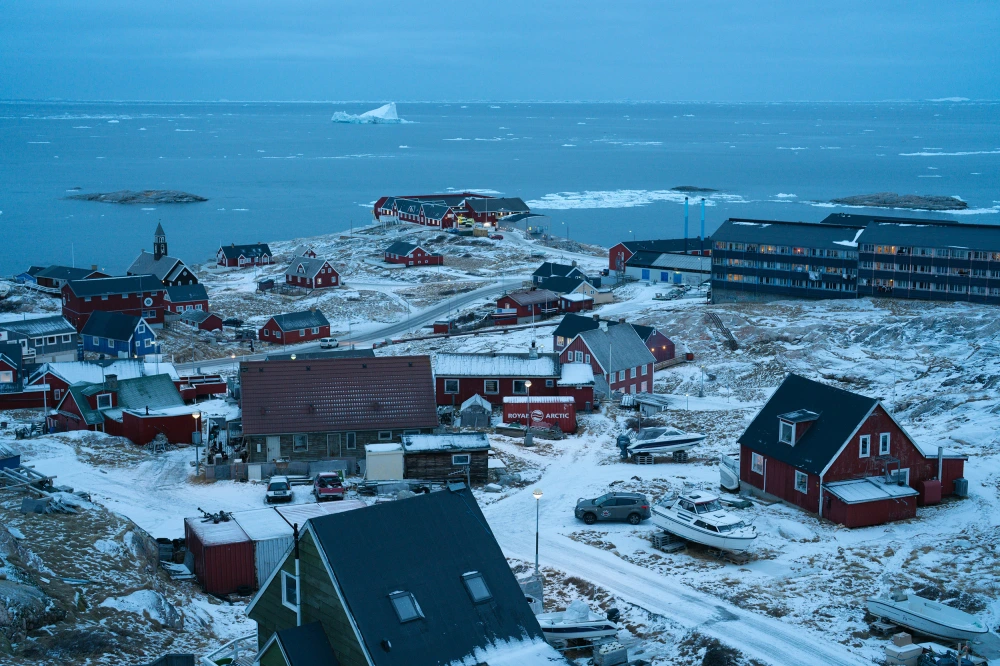

Denmark and Greenland are sending senior officials to Washington for high-level talks with the United States as tensions rise over renewed comments from President Donald Trump suggesting American control of Greenland.
The planned meetings come amid growing concern in Copenhagen and Nuuk that repeated public statements from the U.S. president have shifted from rhetorical curiosity to strategic pressure. Officials from both Denmark and Greenland say the discussions are intended to reinforce diplomatic norms and clarify their positions directly with U.S. leadership.
Greenland, while part of the Kingdom of Denmark, enjoys extensive self-government and has steadily expanded its authority over domestic affairs. Defense and foreign policy, however, remain under Danish oversight, making Washington’s remarks particularly sensitive for both governments.
Rising Tensions Over Arctic Strategy
President Trump has once again emphasized Greenland’s strategic importance, citing its location in the Arctic and its proximity to major shipping routes, military corridors, and emerging areas of competition with Russia and China. He has argued that U.S. ownership would strengthen American national security and protect Western interests in the region.
Those statements have triggered alarm in Denmark, a close NATO ally of the United States. Danish officials have pushed back firmly, stressing that Greenland is not for sale and that any discussion of its future must respect international law and the will of its people.
Greenland’s leaders have echoed that stance, reiterating that decisions about the island’s political status belong solely to its population. They have warned that outside pressure risks undermining democratic principles and destabilizing relationships in the Arctic.
Behind closed doors, diplomats acknowledge that Greenland’s growing geopolitical value has intensified competition among global powers. Melting ice has opened new shipping lanes and raised interest in natural resources, increasing the region’s strategic weight.
Diplomatic Push to Ease Strains
The upcoming meetings with Vice President J.D. Vance and Secretary of State Marco Rubio are viewed by Denmark as an opportunity to de-escalate tensions through direct engagement. Danish officials have described the talks as necessary to prevent misunderstandings from evolving into lasting diplomatic rifts.
Greenland’s participation in the discussions underscores its desire to be recognized as a key stakeholder rather than a passive subject of international debate. Greenlandic leaders have consistently sought a stronger voice in matters affecting the island’s future, particularly as global attention on the Arctic grows.
In Copenhagen, Prime Minister Mette Frederiksen has warned that coercive rhetoric directed at Greenland could damage trust within NATO. She has emphasized that alliance unity depends on respect for sovereignty and the rule of law.
European officials have privately expressed concern that aggressive posturing toward Greenland could set a troubling precedent, especially at a time when NATO faces multiple external challenges. Maintaining cohesion among allies remains a top priority for European capitals.
Greenland’s Future and Global Implications
Within Greenland, political leaders across party lines have rejected any suggestion of becoming part of the United States. While there is ongoing debate about long-term independence from Denmark, there is broad agreement that Greenland’s future should be shaped internally, not imposed from abroad.
Public opinion in Greenland reflects a strong attachment to self-determination and cultural identity. Many residents view international interest as both an opportunity and a risk, welcoming investment while resisting foreign control.
The dispute has also reignited broader discussions about Arctic governance. As climate change accelerates environmental transformation in the region, questions about security, resource management, and indigenous rights have taken on greater urgency.
Analysts note that Greenland’s strategic value makes it a focal point for emerging global rivalries. However, they caution that unilateral approaches could destabilize a region that has historically relied on cooperation and shared norms.
Denmark and Greenland have sought to counter external pressure by reinforcing ties with NATO and emphasizing collective security arrangements. Officials argue that existing defense agreements already address U.S. strategic concerns without altering sovereignty.
At the same time, Greenland’s leaders continue to pursue greater economic independence, including investments in renewable energy, mining, and infrastructure. These efforts are seen as essential to strengthening the island’s autonomy over the long term.
As talks approach, expectations remain cautious. While no immediate resolution is anticipated, diplomats hope the meetings will reaffirm mutual respect and reset the tone of the relationship.
The outcome of the discussions could shape not only U.S.–Danish relations but also broader cooperation in the Arctic. With global attention fixed on the region, the way allies manage this dispute may influence future norms around sovereignty, security, and diplomacy.
Ultimately, Denmark and Greenland are seeking reassurance that longstanding alliances remain grounded in shared values, even as strategic realities evolve. How Washington responds may determine whether tensions ease—or deepen—in one of the world’s most geopolitically sensitive regions.
