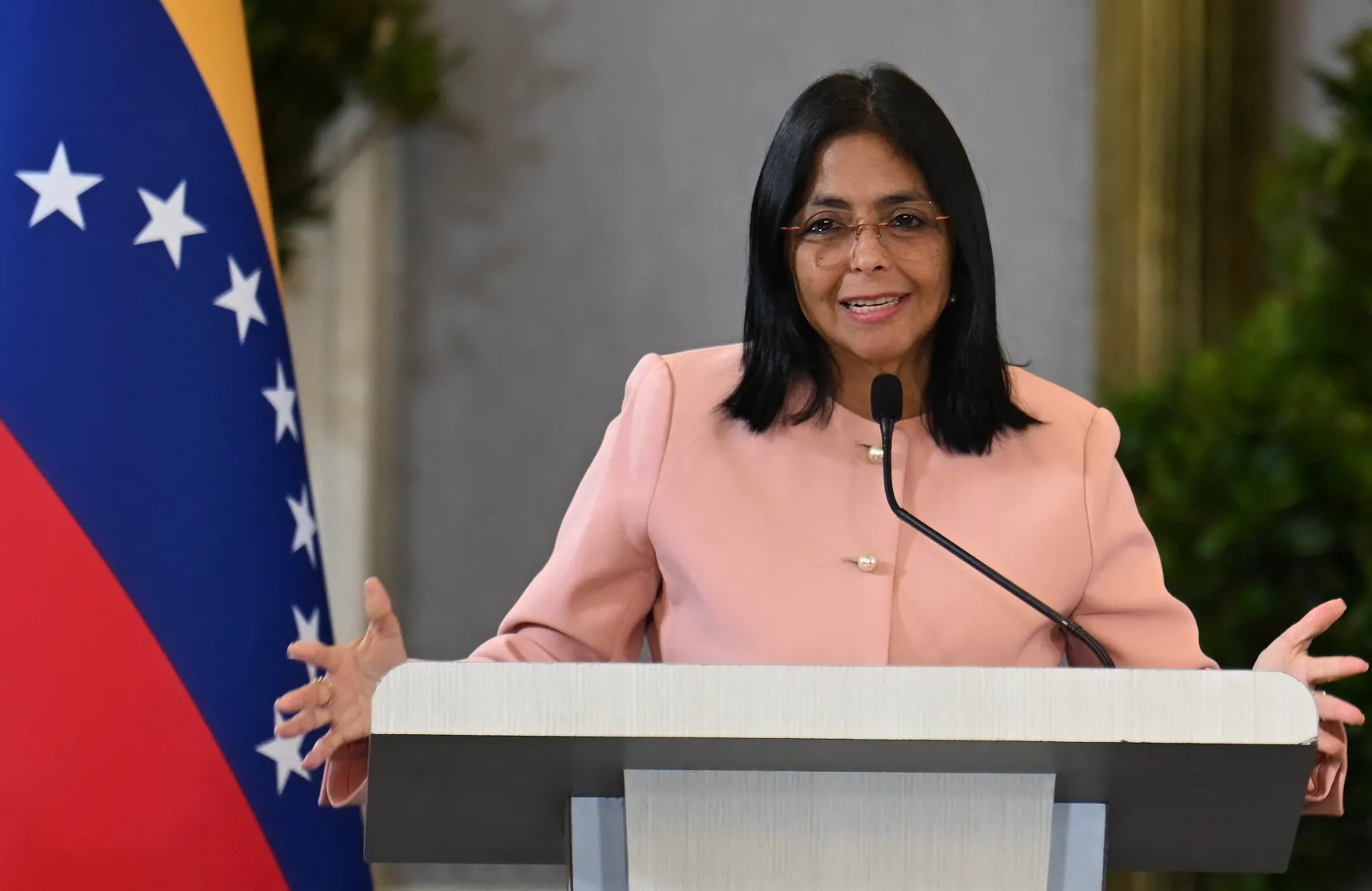

Delcy Rodríguez has suddenly become one of the most talked-about figures in Venezuelan politics, as observers debate whether she could transform her crisis-ridden nation in a fashion similar to Deng Xiaoping’s reinvention of China decades ago. After years of economic collapse, political dysfunction, and social trauma, Venezuela now stands at a crossroads, with Rodríguez at its helm amid sweeping uncertainty.
Following Nicolas Maduro’s dramatic ousting, Rodríguez was thrust into the position of acting president, a role that places enormous expectations and challenges on her shoulders. Educated in France and long embedded within Venezuela’s ruling political elite, she has signalled that economic change — and possibly a new relationship with the broader world — is on the horizon.
While some see echoes of China’s post-Mao reform era in her rhetoric, the comparison to Deng Xiaoping remains deeply contentious. Deng not only liberalised the Chinese economy but did so while maintaining strict political control, a model that Venezuela’s new leadership appears to be studying closely.
Rodríguez herself has publicly called for a “new chapter” for Venezuela’s battered economy, suggesting changes to oil laws that could bring foreign firms into the country’s vast energy sector. This approach has raised hopes among certain investors and politicians that Venezuela could, at last, break out of decades of stagnation.
However, critics warn that the label “Latin America’s Deng Xiaoping” may be more of a public relations framing than an accurate reflection of potential policy directions. They argue that Rodríguez’s history within the Maduro government and her role as a staunch supporter of the ruling party make any substantive political reform unlikely, even if economic adjustments are pursued.
Economic Renewal Ambitions and Challenges
Rodríguez’s vision for economic renewal includes targeted reforms to the oil industry, long Venezuela’s economic backbone. Under her direction, lawmakers have advanced legislation aimed at opening the sector to foreign and private investment, breaking from decades of strict state control. Such changes are intended to draw in capital and expertise that the industry desperately lacks after years of mismanagement and sanctions.
She has also announced significant investment plans for the oil sector in 2026, signalling a push toward expanded production and infrastructure development. These plans reaffirm her belief that revitalising oil can be the engine of broader economic rescue.
Still, Venezuela’s economic fundamentals remain fragile. Inflation continues to ravage ordinary Venezuelans, purchasing power is near historic lows, and public services struggle to function at basic levels. Reviving growth will require far more than oil sector tweaks — including restoring confidence among international investors and stabilising the currency.
The resurgence of foreign investment is also tied to broader diplomatic efforts, including outreach to the United States and other markets. Rodríguez has expressed a desire for warmer ties with Washington, even as she affirms Venezuela’s sovereign right to maintain relations with countries like China, Russia, Cuba, and Iran. This balancing act underscores the complex geopolitical terrain her leadership must negotiate.
But skeptics argue that meaningful economic transformation will remain elusive without addressing deep structural weaknesses, corruption, and lingering political uncertainty. Economists say that Venezuela’s economy cannot be fixed merely by oil deals if fundamental governance issues are not resolved.
Political Legacy and Authoritarian Concerns
The comparison to Deng Xiaoping stems primarily from a perceived blend of economic pragmatism with political continuity, but many analysts caution that the two figures are not easily equatable. Deng’s reforms in China resulted in dramatic economic growth while preserving one-party rule. Critics fear that, under Rodríguez, Venezuela may pursue economic openings without any genuine democratic expansion or human rights improvements.
Rodríguez’s long tenure across various levels of government — including key roles under both Hugo Chávez and Maduro — has tied her closely to a political system widely criticised for repression and lack of political freedom. She has overseen branches of government accused of suppressing dissent, and her leadership is rooted in the same ideological environment that has driven Venezuela’s decades-long crisis.
Even as she champions economic reform, Rodríguez has made clear that political power should remain firmly in the hands of her party and allied forces. There is little indication that competitive elections, independent media spaces, or judicial independence will be forthcoming under her interim rule.
Supporters of the Deng comparison point to her Sorbonne education, long service in government, and emphasis on “reform and opening up” language reminiscent of China’s late-20th-century transformation. They argue that Venezuela could benefit from a similar pragmatic pivot toward market-engaged policies while maintaining centralised political authority.
Yet others see these efforts as mainly cosmetic. They contend that without accountability for past abuses and a genuine shift in governance culture, any economic gains could entrench an authoritarian model rather than loosen it. This tension — between economic pragmatism and political control — is at the core of the debate over what Rodríguez’s leadership truly represents.
The Future of Venezuela’s Path
Amid these debates, Venezuela’s path forward remains uncertain. Rodríguez’s interim presidency follows a dramatic constitutional crisis triggered by the capture of Maduro by foreign forces, a development that has reshaped Venezuelan politics and raised complex legal questions.
Public consultations planned for March aim to involve ordinary Venezuelans in shaping economic policy, a move Rodríguez frames as participatory and inclusive. These consultations could provide valuable insight into popular sentiment — but whether they will influence fundamental policy direction is yet to be seen.
International reactions are equally mixed. Some global investors are watching with cautious interest, while opponents of Rodríguez’s governance decry her continued grip on power and call for a more democratic transition.
In the end, the possibility that Delcy Rodríguez could become a Latin American Deng Xiaoping hinges on more than rhetoric. It depends on her ability to enact meaningful economic reform that attracts investment, stabilises the economy, and improves living conditions — all while navigating a political landscape rife with entrenched power structures and ideological resistance.
Whether her interim leadership will usher in a new era of growth, reinforce authoritarian continuity, or somewhere in between remains one of the most consequential questions facing Venezuela today. Only time will tell whether Rodríguez’s tenure marks a historic turning point or reinforces long-standing patterns of governance.
