

Trump Orders Blockade of Sanctioned Oil Tankers in Escalation Against Venezuela
In a dramatic escalation of U.S. policy toward Venezuela, President Donald Trump announced on Tuesday that he is ordering a total blockade of all sanctioned oil tankers entering and leaving Venezuela, ratcheting up economic pressure on the government of President Nicolás Maduro.
The move comes amid heightened tensions in the region, where the United States has significantly increased its military presence, including the deployment of warships and other assets in the Caribbean and the eastern Pacific Ocean. This decision — aimed squarely at Venezuela’s vital oil industry — has drawn sharp reactions both domestically and internationally.
President Trump declared that the blockade will apply to all “sanctioned oil tankers” headed to or from Venezuelan ports, a measure he described on social media as necessary to combat activities he says fund terrorism, drug trafficking, and human trafficking. Trump also stated that his administration has designated the Venezuelan government as a “foreign terrorist organization,” a characterization that has not been formally recognised by the U.S. State Department.
Trump insisted that the United States will not allow what he described as “a hostile regime” to benefit from natural resources he claims were stolen from America, adding that Venezuela must return assets, including oil and land, before the blockade is lifted. This rhetoric marks an intensification of presidential pressure on Caracas.
The oil industry is the backbone of Venezuela’s economy, and nearly all of the country’s export revenues come from crude sales. For decades, Venezuela has relied on its petroleum reserves — among the largest in the world — to sustain its economy, support social programs, and maintain diplomatic relations. Interrupting tanker traffic threatens to severely disrupt those revenues.
Under longstanding U.S. sanctions, many Venezuelan oil exports have been curtailed, and most vessels carrying crude have to navigate complex routes or engage in ship-to-ship transfers to avoid detection. With the new blockade, all vessels on the U.S. sanctions list that attempt to load or discharge oil in Venezuelan waters could be intercepted or seized by U.S. forces, effectively sealing off one of the government’s few remaining sources of income.
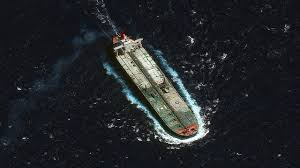
The announcement follows closely on the heels of a U.S. military operation last week in which a sanctioned oil tanker was seized off the coast of Venezuela. The vessel, reportedly carrying millions of barrels of crude, was taken in international waters by a combination of U.S. Coast Guard and naval forces, a rare move that signalled Washington’s willingness to take bold action against Caracas.
That seizure, confirmed by President Trump, represented the first major interdiction of its kind in years and laid the groundwork for the blockade. Following the operation, several more tankers carrying Venezuelan crude reportedly remained anchored in Venezuelan waters to avoid potential seizure, effectively creating a de facto embargo even before Trump’s formal blockade order.
The U.S. military presence in the region has grown increasingly visible in recent months. According to defence officials, nearly a dozen warships — including an aircraft carrier and amphibious ships — are now operating near Venezuelan sea lanes, alongside maritime patrol aircraft and other support assets. This buildup gives the United States significant capability to monitor and intercept shipping, although enforcing a blockade of all sanctioned tankers will pose logistical challenges.
Oil prices reacted immediately to Trump’s announcement. Futures for U.S. crude rose by more than 1% as markets absorbed the prospect of tighter supply and increased geopolitical risk. Traders cited the potential for further disruptions to Venezuelan exports as a key driver of the uptick, which came even as global crude benchmarks were trading near multi-year lows earlier in the week.
In Washington, the blockade order sparked intense debate on Capitol Hill. Some lawmakers echoed the White House’s assertion that drastic action was necessary to curtail criminal activity and deny financial resources to a regime the White House portrays as brutal and corrupt.
Others, however, raised alarms about the legality and consequences of the blockade. Critics, including senior legislators in both parties, described the blockade as an unprecedented use of executive power that skirts congressional authorization and could be interpreted as an act of war.
Legal scholars have weighed in with caution, noting that while the United States has broad authority to enforce sanctions and exercise control over its own flagged vessels, a blockade that affects international shipping operations may invite scrutiny under international maritime law.
The Venezuelan government responded forcefully to the blockade. President Nicolás Maduro’s administration condemned the United States’ actions as illegal and tantamount to piracy. Venezuelan officials accused the Trump administration of attempting to seize control of the nation’s natural resources and undermining its sovereignty.
In state media and official statements, Caracas framed the blockade as part of a broader campaign of economic aggression designed to destabilise the country and inflict suffering on its people. Maduro vowed resistance and appealed to regional partners for support in opposing what he characterised as U.S. imperialism.
Regional reactions have been mixed. Some neighbouring governments have expressed concern about the escalating tension between Washington and Caracas, warning that the blockade could deepen humanitarian problems and prompt further migration pressures across Latin America.
Others, however, have tacitly supported efforts to isolate the Maduro government, pointing to long-standing concerns about corruption, economic mismanagement, and the Venezuelan state’s alleged involvement in criminal networks. Diplomatic engagement through regional organisations has been limited, with talks repeatedly stalled by the intensity of the standoff.
The blockade also comes amid broader geopolitical shifts. Venezuela has historically relied on markets in Asia — particularly China — to sustain its oil trade outside Western sanctions. Analysts suggest that a U.S. blockade could drive Caracas closer to alternative partners or accelerate efforts to develop clandestine shipping mechanisms to bypass U.S. enforcement.
Such dynamics raise the spectre of fragmentation in global oil markets, particularly if Venezuelan crude is rerouted through unconventional channels or if countries defy U.S. pressure to support Caracas. The long-term effects on global energy flows remain uncertain, but traders and strategists will be watching closely as the situation unfolds.
Domestic political implications in the United States are also significant. President Trump’s hard-line stance on Venezuela has been a staple of his foreign policy narrative, resonating with supporters who favour assertive action against authoritarian regimes. At the same time, the growing military involvement and economic disruption could invite criticism from those who view the measures as overreach.
The blockade order arrives at a time when the Trump administration is facing legal disputes and political challenges on multiple fronts, from immigration policy to military engagements abroad. The question of how far the executive branch can extend its authority in foreign interventions without explicit congressional support is likely to persist as a contentious topic in national debates.
As the blockade takes effect, the immediate focus will be on whether Venezuelan oil shipments slow further or grind to a halt, how the Maduro government adapts its strategy, and whether diplomatic channels can be reopened to avert a deeper crisis.
For Venezuela’s people, already suffering from years of economic hardship and political turmoil, the impact of a blockade strikes at the core of national survival. With oil revenues critically diminished, access to essential goods, medical supplies and foreign exchange could shrink further, compounding an already fragile humanitarian situation.
In the coming days, global energy markets, international diplomatic networks, and military strategists alike will be watching developments closely. The U.S. blockade of Venezuelan oil tankers marks a new chapter in the fraught relationship between Washington and Caracas — one that could reverberate far beyond the region and reshape discussions about sanctions, sovereignty, and the use of maritime force in the modern era.
