

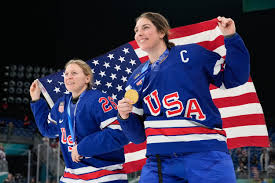
A Golden Moment On and Off the Ice
For most elite athletes, competing in a gold medal game represents the pinnacle of a lifetime of sacrifice. For American hockey star Hilary Knight, that pressure-filled stage carried even more weight. Not only was she battling for Olympic supremacy, but she was also quietly preparing for a life-changing personal milestone: proposing to her girlfriend.
The decorated forward, widely recognized as one of the most influential figures in women’s hockey, recently opened up about the emotional rollercoaster of planning a proposal while preparing for one of the most intense competitions of her career. The result was a deeply personal moment that unfolded against the backdrop of global athletic achievement.
Knight admitted she felt more nervous about the proposal than about skating in a gold medal matchup — a telling reflection of how much the moment meant to her.
Balancing Olympic Pressure With Personal Milestones
Competing on the World’s Biggest Stage
Gold medal games at the Olympic level demand unrelenting focus. Every shift, every pass, and every shot can alter the course of history. For veterans like Knight, the stakes remain just as high as they were at the start of their careers.
Preparing for such a game involves months — sometimes years — of physical training, tactical preparation, and mental conditioning. Athletes must eliminate distractions, regulate emotions, and maintain laser focus.
Yet Knight was juggling something far more personal alongside the tactical playbook.
A Secret Plan Behind the Scenes
While teammates and coaches zeroed in on strategy, Knight carried a secret of her own. She had decided that regardless of the game’s outcome, she wanted to take the next step in her relationship.
Planning a proposal during an Olympic tournament required careful coordination. Security protocols, team schedules, media obligations, and travel logistics make spontaneous gestures nearly impossible. Knight had to ensure the moment would be private, meaningful, and authentic — all while keeping it hidden from her partner.
The secrecy added another layer of emotional intensity to an already high-pressure environment.
The Emotional Build-Up
Nerves Beyond the Ice
Knight revealed that proposing felt more intimidating than competing in the championship itself. As a seasoned athlete, she’s accustomed to performing under pressure. But asking someone to share your life is an entirely different kind of vulnerability.
Athletic pressure is structured and predictable: practice, game plan, execution. A proposal, by contrast, carries emotional uncertainty.
Would the timing feel right?
Would the surprise hold?
Would everything go as planned?
Those questions lingered in her mind even as she laced up her skates for one of the most important games of her career.
Why the Timing Mattered
For Knight, the Olympic stage symbolized commitment, teamwork, and shared dreams — values that mirrored her relationship. Proposing in the midst of the tournament felt symbolic.
The Olympics represent years of dedication. Similarly, relationships are built on shared effort, resilience, and mutual support. The convergence of those themes made the timing feel meaningful rather than coincidental.
The Proposal Moment
From Arena Intensity to Intimate Celebration
After the final buzzer sounded and the emotional rush of the gold medal game subsided, Knight shifted her focus from team achievement to personal celebration.
The proposal itself was intentionally private. Despite the global attention surrounding the Olympics, Knight wanted the moment to belong solely to them.
Away from cameras and roaring crowds, she asked the question she had been rehearsing mentally for days. The nerves she felt beforehand melted into relief and joy.
The answer was yes.
A New Chapter Begins
For Knight, the proposal marked the beginning of a new journey. Olympic medals represent milestones in a career, but an engagement signifies a lifelong partnership.
The juxtaposition of competing for national glory and committing to a personal future highlights the multifaceted lives of modern athletes. They are not only competitors; they are partners, family members, and individuals navigating major life decisions under extraordinary circumstances.
Hilary Knight’s Legacy in Women’s Hockey
A Trailblazer for Team USA
Knight’s career spans multiple Olympic Games and world championships. As one of the most recognizable faces in women’s hockey, she has consistently elevated the sport’s visibility.
Her leadership on and off the ice has shaped Team USA’s culture. Teammates often describe her as a stabilizing force — someone who thrives in big moments.
Adding a proposal story to her Olympic narrative reinforces her image as an athlete unafraid to embrace both strength and vulnerability.
Impact Beyond Statistics
While goals and assists define box scores, influence extends beyond numbers. Knight’s openness about her engagement reflects the evolving landscape of professional sports, where athletes increasingly share their authentic selves.
Visibility matters, particularly in women’s sports and within the LGBTQ community. By speaking candidly about her relationship, Knight contributes to a broader cultural shift toward inclusion and representation.
The Evolution of LGBTQ Visibility in Sports
From Silence to Celebration
Not long ago, many athletes felt pressure to keep personal relationships private. Concerns about sponsorships, team dynamics, and public perception often discouraged openness.
Today, the sports world is gradually embracing diversity. High-profile athletes across leagues and disciplines have publicly shared their identities and relationships.
Knight’s engagement story fits within that broader evolution. Rather than treating her proposal as controversial, the narrative is framed as a celebration — a sign of progress within professional athletics.
The Power of Representation
For young athletes watching the Olympics, representation can be transformative. Seeing a decorated Olympian confidently share her engagement sends a powerful message: success and authenticity are not mutually exclusive.
Knight’s visibility reinforces that elite performance and personal identity coexist seamlessly.
Managing Performance Under Emotional Stress
The Psychology of Dual Pressures
Balancing a secret proposal with Olympic preparation underscores the psychological resilience required at the highest levels of sport.
Elite athletes train not only physically but mentally. Techniques such as visualization, emotional regulation, and compartmentalization help them perform under pressure.
In Knight’s case, those skills extended beyond gameplay. She had to compartmentalize her excitement and nerves to maintain peak performance during competition.
What This Says About Elite Athletes
The ability to manage personal milestones while competing internationally speaks to a broader truth: athletes are masters of controlled intensity.
Knight’s experience illustrates how elite competitors harness emotion rather than allowing it to become a distraction. The proposal did not derail her focus; instead, it likely served as a source of motivation and joy.
Women’s Hockey’s Growing Global Platform
Olympic Moments That Drive Growth
The Olympic spotlight consistently propels women’s hockey into global conversations. Gold medal games draw significant viewership, introducing new audiences to the sport.
Personal stories like Knight’s amplify that exposure. Human-interest narratives make athletes relatable, expanding the sport’s appeal beyond hardcore fans.
As women’s hockey continues to push for greater investment, media coverage, and professional stability, high-profile figures like Knight play a crucial role.
Inspiring the Next Generation
Young players often cite Olympic stars as their primary inspiration. Knight’s career has already influenced countless aspiring athletes.
Her engagement story adds another dimension — one that demonstrates balance, authenticity, and courage.
In a sports culture increasingly focused on holistic well-being, such examples resonate deeply.
A Career Defined by Big Moments
Thriving Under Pressure
From world championships to Olympic finals, Knight has consistently embraced high-stakes environments. The gold medal game was simply another chapter in a long history of competitive excellence.
Adding a proposal into that mix only underscores her comfort with monumental moments.
Beyond the Ice
As her career continues, Knight’s legacy will likely extend into advocacy, mentorship, and leadership roles. Engagement and future family milestones may coincide with continued professional achievements.
For fans, that blend of athletic dominance and personal joy strengthens the emotional connection to her story.
What This Means for Sports Culture
Knight’s proposal narrative reflects a modern sports era defined by transparency. Athletes today are encouraged to share not only victories but vulnerabilities.
The merging of personal and professional milestones humanizes competitors who once seemed distant icons. It reinforces the idea that life’s biggest decisions do not pause for championships — and sometimes, they align beautifully with them.
In an age where authenticity drives fan engagement, stories like this deepen loyalty and broaden appeal.
A Gold Medal and a Ring
Hilary Knight’s gold medal game will be remembered for its athletic significance. Yet for her, the more nerve-wracking moment came afterward — kneeling down to ask a life-changing question.
The proposal encapsulated everything the Olympics symbolize: commitment, courage, and belief in a shared future.
As women’s hockey continues to expand its global footprint, Knight remains at the forefront — not only as a champion but as a role model demonstrating that greatness on the ice can coexist with profound personal joy.
The gold medal was a triumph.
The “yes” was unforgettable.
