
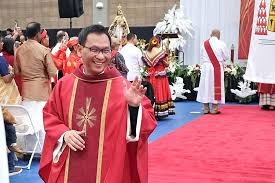

A Catholic bishop who now speaks forcefully on immigration does so not as a distant observer, but as someone whose own life was shaped by displacement, uncertainty, and welcome. For Bishop Michael Pham, protecting immigrants is not an abstract political position or a talking point rooted only in church teaching. It is a reflection of personal history, pastoral experience, and a conviction that faith demands action.
Pham’s story begins far from the pulpits and chancery offices he now occupies. Like many immigrants, he grew up navigating cultural divides, learning a new language, and adjusting to unfamiliar systems. Those early years left a lasting impression. He has often spoken about the fear and vulnerability that come with migration, especially for families who leave behind everything familiar in search of safety or opportunity.
That background has shaped the way he approaches his role as a bishop. Rather than viewing immigration solely through legal or political frameworks, Pham emphasizes the human dimension. He regularly reminds parishioners that behind every policy debate are real people: parents trying to protect their children, workers seeking dignity, and communities hoping for stability. In his view, the church has a responsibility to stand with those people, regardless of shifting political winds.
As national debates over immigration have grown increasingly polarized, Pham has emerged as a clear and sometimes controversial voice. He has criticized policies that separate families or place migrants in prolonged detention, arguing that such measures contradict both moral principles and basic human compassion. While he acknowledges the importance of laws and borders, he insists that enforcement must never come at the expense of human dignity.
Within his diocese, this stance has translated into concrete action. Churches under his leadership have expanded legal aid clinics, food programs, and counseling services for immigrant families. Parishes have opened their doors to people facing deportation proceedings, offering not just material support but also a sense of belonging. Pham sees these efforts as a natural extension of the Gospel’s call to welcome the stranger.
His advocacy has not been without resistance. Some critics argue that religious leaders should avoid political issues, while others contend that strong immigration enforcement is necessary for national security. Pham responds by drawing a careful distinction between partisanship and moral witness. For him, defending immigrants is not about aligning with a political party but about upholding values central to his faith.
He also points to the broader contributions immigrants make to society and to the church itself. Many parishes are sustained by immigrant communities whose faith, volunteerism, and cultural traditions enrich congregational life. Pham often notes that Catholicism in the United States would look very different without the presence and leadership of immigrants.
Beyond local efforts, Pham has joined other faith leaders in speaking at national forums and issuing public statements. These collaborations aim to shift the tone of the conversation, encouraging policymakers to consider reforms that balance border management with pathways to legal status and family unity. Pham believes that faith communities can play a unique role in bridging divides, offering a moral lens that transcends partisan talking points.
At the heart of his message is empathy. Pham frequently urges people to imagine themselves in the place of those fleeing violence, poverty, or persecution. He recalls his own family’s uncertainty upon arrival and the relief that came from small acts of kindness. Those memories continue to guide his ministry and fuel his determination to ensure others receive the same compassion.
For many immigrants in his diocese, Pham’s leadership has provided reassurance during uncertain times. Knowing that a bishop understands their experiences firsthand has helped build trust and solidarity. It has also empowered laypeople, both immigrants and non-immigrants, to get involved in advocacy and service.
Pham is realistic about the limits of what one bishop can accomplish. He knows that systemic change requires political will and broad public support. Still, he believes that consistent moral witness can gradually reshape attitudes. By telling stories, offering practical help, and challenging harmful narratives, he hopes to keep the focus on shared humanity.
Ultimately, Pham’s approach to immigration reflects a broader vision of what it means to lead in the church today. Leadership, in his view, is not about remaining neutral in the face of suffering. It is about standing with those on the margins and reminding society of its deepest values.
For Bishop Michael Pham, protecting immigrants is inseparable from his identity as a pastor and as someone who once depended on the welcome of others. His advocacy is rooted in memory, faith, and a conviction that compassion is not optional. In a time of division and uncertainty, his voice serves as a reminder that personal stories can still shape public conscience.
