

Commuter Train Crash Near Barcelona
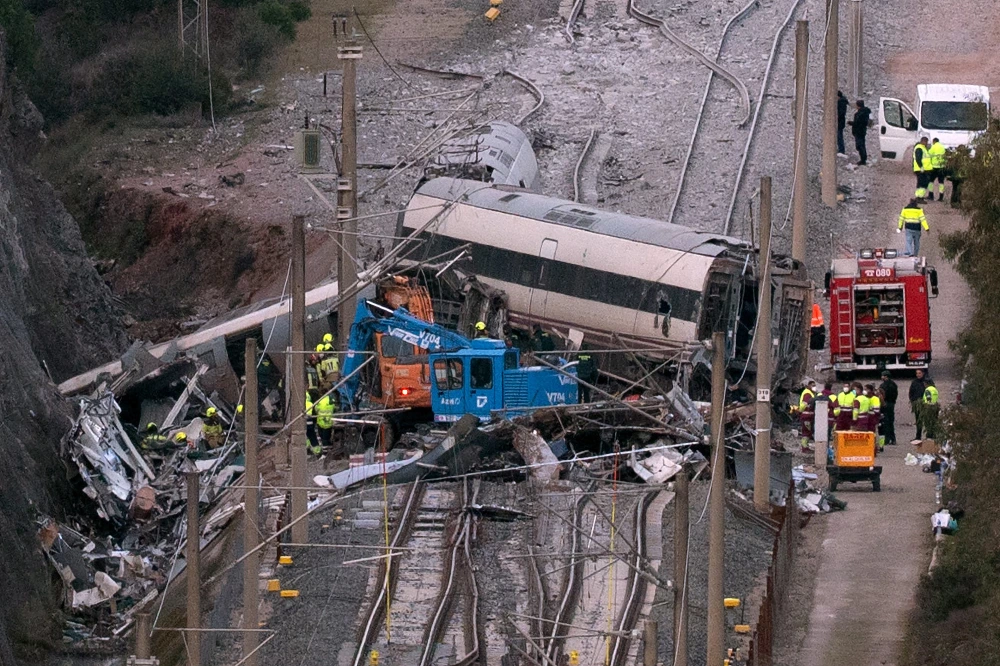
A commuter train derailed near Barcelona on Tuesday evening, resulting in the death of one person and injuring dozens of others as emergency services rushed to the scene. The train, operating on a regional rail line outside the city, encountered a collapsed retaining wall that had fallen onto the tracks after heavy rainfall swept through the area earlier in the week. Dozens of passengers were on board at the time, and at least 37 people were reported injured, with several in serious condition. The casualty was confirmed by regional authorities, who expressed sorrow for the loss of life and concern for those hurt in the incident.
The crash occurred near the town of Gelida, about 35 minutes from central Barcelona, where the commuter rail line runs through a landscape shaped by hills and older infrastructure. Local firefighters, ambulances, and rescue crews worked through the night to treat the injured and clear the wreckage. Twenty ambulances and multiple fire units were dispatched, and temporary medical facilities were set up near the crash site to care for passengers suffering from various degrees of injury. Authorities confirmed that no passengers remained trapped inside the train once search operations concluded.
Several emergency responders described chaotic scenes as they worked to evacuate passengers and assist the wounded. Among the injured, at least five people were in serious condition, while others sustained moderate to minor injuries. Hospitals in the region reported an influx of patients, some struggling with shock and trauma in addition to physical wounds. Medical staff said they were preparing for more arrivals throughout the night as emergency transport continued.
Officials noted that the train’s driver was the victim who died in the crash, underscoring the risks faced by frontline transport workers. The identity of the deceased has not yet been released as authorities work to notify next of kin. Public reaction in Barcelona has been somber, with community leaders expressing solidarity with the victims and commending the efforts of first responders.
Context of Rail Safety Concerns
This deadly commuter rail accident comes just days after a high-speed rail disaster in southern Spain that claimed dozens of lives and left many more injured in one of the nation’s worst rail tragedies in years. In that earlier crash, two passenger trains collided after one derailed, resulting in significant loss of life and widespread shock across the country. Spain’s government declared a period of national mourning and mobilized extensive resources to support rescue efforts and investigations.
The proximity of these incidents—geographically and in time—has sparked debate and concern over rail safety and infrastructure maintenance in Spain. While the high-speed network is generally considered modern and reliable, commuter rail services have periodically experienced reliability issues. Analysts suggest that heavy rainfall, aging infrastructure, and challenging weather conditions may have contributed to this latest derailment as well as test the resilience of rail lines across the region.
Transport authorities have begun preliminary reviews of the accident site to determine what exactly caused the retaining wall to collapse onto the tracks. Initial assessments point to the recent storms that battered northeastern Spain, saturating soil and undermining older structural supports along the rail corridor. Investigators are consulting structural engineers as part of a broader effort to assess the safety of vulnerable railway sections.
Rail operator statements emphasized that services on the affected line have been suspended while crews work to clear debris and inspect the infrastructure for further hazards. Passengers who had planned to travel in the days ahead have been advised to use alternative transport or delay journeys. The disruption has drawn criticism from some regular commuters who say that safety upgrades have lagged behind the growth in ridership over recent years.
Government and Public Response
Spanish Prime Minister Pedro Sánchez publicly addressed the commuter train derailment and extended his condolences to victims and their families. He also reiterated the government’s commitment to bolstering rail safety and improving infrastructure resilience, particularly in light of recent extreme weather events. The prime minister affirmed that all necessary resources would be deployed to support recovery and investigation efforts.
Regional government leaders echoed these sentiments, urging calm and coordinated action while emergency services continued their work. Local officials have called for increased investment in railway maintenance to prevent similar accidents in the future, pointing to climate change as an exacerbating factor that must be accounted for in infrastructure planning. Some politicians have also called for independent oversight of rail safety protocols.
Across Spain, civic groups and transport worker unions have rallied for stronger safety measures and ongoing inspections of rail corridors. Many union representatives expressed grief for the fallen driver and concern for the well-being of those injured in the latest crash. They have also urged authorities to involve workers directly in safety audits, citing the firsthand experience of those on the front lines of rail operations.
Public sentiment remains heavy, with community vigils and tributes emerging in various cities in solidarity with rail accident victims. Social media tributes reflect widespread empathy and calls for action to ensure that tragedies of this scale do not repeat. As families await more information about loved ones impacted by the derailment, national attention remains firmly focused on rail safety and emergency response efforts.
Looking Ahead
Investigators caution that a full determination of the cause of the Gelida derailment could take weeks, as experts analyze structural data and weather conditions leading up to the crash. Family members of the injured and deceased have been urged to stay in close contact with authorities as search and recovery continue. Comprehensive safety reviews are expected to follow, as part of a broader reassessment of Spain’s railway networks.
Meanwhile, transport officials are conducting risk assessments across key commuter lines to identify other potential hazards before further service resumes. Emergency drills and contingency planning exercises are also reportedly being updated in light of recent events. These steps aim to strengthen preparedness for extreme weather and ageing segments of railway infrastructure.
Families of victims from both the commuter derailment and the earlier high-speed collision are receiving support and services from government agencies and humanitarian organizations. Psychological counseling, medical care, and financial assistance programs have been mobilized to aid in recovery and transition. These coordinated efforts reflect a nationwide push to address both the immediate and long-term impacts of the accidents.
As Spain continues its period of mourning and introspection, rail operators, government officials, and citizens alike face the challenge of balancing urgent safety concerns with the everyday needs of a nation that relies heavily on its rail network. The coming weeks will be crucial for understanding the root causes of these distressing events and preventing future tragedies on Spanish soil.
