

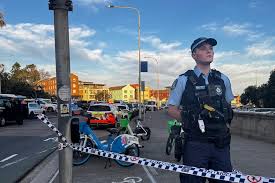
On the evening of 14 December 2025, a mass shooting at Bondi Beach in Sydney turned a Jewish community celebration into one of the deadliest violent attacks in Australia’s recent history.
The incident occurred during a Hanukkah event known as Chanukah by the Sea, which drew hundreds of people to the popular seaside suburb. As darkness fell and families gathered to celebrate the festival of lights, two gunmen opened fire from an elevated position near a playground area, leaving a trail of chaos and devastation.
By the time the violence ended, 16 people were confirmed dead, including one of the attackers, and dozens more were wounded, with at least 38 people taken to hospitals across Sydney for treatment. Victims included men, women and children, deeply impacting families and communities both locally and overseas.
New South Wales Police Commissioner Mal Lanyon formally declared the shooting a terrorist incident, citing the nature of the attack, the weapons involved and the fact that the gathering was a clearly identifiable Jewish celebration.
One of the shooters was killed by police at the scene. The second, later identified as 24-year-old Naveed Akram, was critically injured and taken into custody. Authorities have since conducted multiple searches as part of an expanding investigation into the attackers’ planning and potential connections.
During forensic sweeps of the area, police located additional firearms and improvised explosive devices (IEDs) near the crime scene. Specialist bomb squads were deployed to secure the area, while investigators worked to ensure there were no further threats to the public.
Residents and visitors were urged to avoid Bondi Beach and surrounding streets as emergency services, forensic teams and counterterrorism officers continued their work late into the night and into the following day.
Eyewitnesses described scenes of panic as gunshots rang out, with families fleeing in all directions in search of safety. Many reported hearing sustained bursts of gunfire and seeing injured people lying on the ground before emergency crews arrived.
In one widely praised act of bravery, a bystander managed to tackle and disarm one of the attackers, potentially preventing further loss of life. Police later acknowledged that civilian intervention played a role in limiting the scale of the attack.
Prime Minister Anthony Albanese condemned the shooting as an act of “pure evil” and expressed solidarity with the Jewish community. He pledged full federal support for the investigation and for those affected, stating that hate-fuelled violence would not be tolerated in Australia.
Albanese confirmed that the national cabinet would meet to consider tougher gun laws, including stricter licensing requirements, improved monitoring of firearm owners and potential changes to how weapons permits are reviewed and renewed.
The prime minister also announced increased funding for security at Jewish institutions and community events, alongside support for families of victims, including assistance for overseas relatives seeking to attend funerals and memorials.
New South Wales Premier Chris Minns described the shooting as a profound failure of public safety and signalled that gun law reform was “almost inevitable” in the wake of the tragedy. He said the state government would work closely with federal authorities to address gaps in existing legislation.
Jewish community leaders expressed deep grief and anger, calling for a national strategy to combat antisemitism and better protect minority communities. Several leaders noted that warnings about rising hate-motivated incidents had been raised repeatedly in recent years.
At the same time, leaders from Australia’s Muslim community strongly condemned the attack, emphasising that violence and extremism have no place in society and urging unity in the face of hatred.
Across the country, Australians responded with acts of solidarity. Blood donation centres reported long queues, while vigils and memorial gatherings were held in cities and towns nationwide. Messages of condolence and support also poured in from international leaders and Jewish communities around the world.
Officials described the Bondi Beach shooting as the worst mass shooting in Australia in nearly three decades, reviving national debate over gun control and recalling the landmark reforms introduced after the 1996 Port Arthur massacre.
As investigators continue to piece together the motives behind the attack, political leaders face mounting pressure to ensure that the tragedy leads to meaningful policy change rather than temporary outrage.
For the families of those killed, attention now turns to funerals and mourning rituals, as well as the long process of healing. Advocacy groups warn that without sustained action, incidents of hate-driven violence may continue to rise.
Australia now confronts both the immediate trauma of the Bondi Beach shooting and the broader questions it raises about public safety, extremism and social cohesion, as the nation reflects on how to prevent such a tragedy from happening again.
