

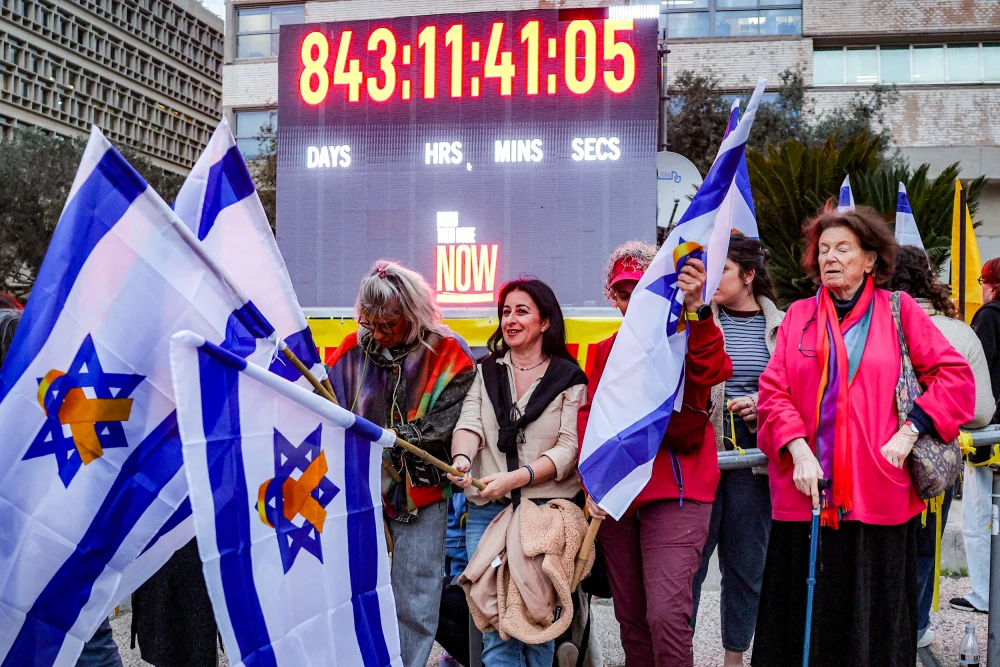
Israel marked a deeply symbolic moment this week as the long-standing countdown in Tel Aviv’s Hostages Square was finally stopped, ending a period of nearly 843 days of public vigilance and national unease.
The digital clock, which had been ticking relentlessly since the horrific events of October 7, 2023, had stood as a stark reminder of the Israeli citizens who were abducted and held in Gaza after militants attacked communities near the border. Its final halt came after news that the remains of the last unidentified hostage held in Gaza had been returned to Israel.
The ceremony to stop the clock drew families, former hostages, supporters, and ordinary citizens to the square, uniting in a moment that was equal parts relief, grief, and reflection on the heavy toll of the conflict and its aftermath.
The Return of the Last Hostage
At the heart of this turning point was the recovery of Master Sergeant Ran Gvili, a young Israeli police officer killed during the outbreak of hostilities and taken into Gaza when militants attacked military and civilian locations.
Gvili’s body was located and securely identified after extensive efforts by Israeli forces, bringing closure for his family and signaling that both surviving and fallen captives from the hostage crisis had been accounted for. This concluded the painstaking task that had gripped the nation for more than two years.
When his remains were brought back with military honors, many who had waited months and years for certainty felt a deep sense that the long chapter of uncertainty was finally passing. For them, bringing him home was both a somber obligation and a moment of collective breathing out.
The return of Gvili’s remains allowed the symbolic clock — which had counted every second since the horrific day that saw more than 250 people taken captive — to be switched off. It froze at the exact moment marking 843 days of waiting and watching, a testament to the endurance and pain of families who had lived with the unknown.
National Reaction and Public Mourning
At Hostages Square, what had once been a place of protest and determination transformed into a site of remembrance and release. Yellow ribbons — once worn widely as symbols of hope — were gently removed by families and citizens, many of whom had watched them flutter in the wind since the crisis began.
Speakers at the ceremony included relatives of the captives — both those freed earlier and those now accounted for — who reflected on what the long ordeal has meant for them personally and for the country as a whole.
Like many, Shira Gvili, Ran’s sister, spoke with a mix of sorrow and relief, emphasizing that although her brother could not return alive, the act of bringing him home honored a promise that Israelis would continue to fight until all were safe.
Prime Minister Benjamin Netanyahu addressed the nation, acknowledging the gravity of the moment and framing it as a step toward healing. His remarks were met with applause, but also quiet contemplation, as the somber reality of loss remained palpable even amid relief.
Meaning of the Clock’s Halt
The clock in Hostages Square became one of the clearest visual symbols of the crisis that began with Hamas’s massive incursion into southern Israel on October 7, 2023. It stood not only as a count of days but as a marker of unresolved agony and unfulfilled hopes.
For families of hostages, each passing minute etched into the digital display represented the passage of life and time they could never get back. Its presence in public space sustained pressure on leaders to secure the return of all captives by whatever means possible.
Stopping the clock did not erase that painful history, but it allowed the nation a moment to acknowledge that a chapter had truly concluded. Israelis and supporters alike gathered with mixed emotions, some voiceful with joy and others heavy with mourning.
The silence that followed the clock’s final tick was itself symbolic — a pause in time, a collective exhale after years of nonstop vigilance and anxiety.
Looking Ahead Amid Unresolved Challenges
Despite this symbolic milestone, profound challenges remain. The conflict that brought the hostages to Gaza continues to shape politics, security policy, and everyday life in Israel and the broader Middle East.
While the return of all hostages — living or deceased — is a moment of immense significance, talks about peace, ceasefire conditions, humanitarian aid, and long-term stability in Gaza and neighboring regions are still underway.
For many observers, the clock’s halt is not a conclusion of broader tensions, but a shift in focus. Families now speak of healing and rebuilding their lives, while policymakers and mediators continue to wrestle with volatile geopolitical dynamics.
Across the square and beyond, political debates persist about next steps for diplomacy, reconstruction, and ensuring that such episodes of violence and suffering do not happen again. The clock’s stillness, then, is both an ending and a beginning — a space for reflection and for planning what comes next.
Carrying Forward Memory and Resolve
When visitors left Hostages Square after the ceremony, many carried with them personal reminders: photos of loved ones, tokens of remembrance, and the stories of those who were lost.
Across Israel, communities mourned together and separately, honoring the memories of the abducted and the thousands of others affected by the conflict. Their shared experiences of loss, resilience, and hope became a thread connecting individuals from all walks of life.
The stopping of the clock does not mean that grief has ended, or that debate about the future has quieted. Instead, it represents a moment of collective pause — an opportunity for national and personal reflection on all that has been endured.
In this way, the conclusion of the hostages’ countdown resonates as a chapter’s close, and as a reminder of the cost of conflict and the value of coming home.
