

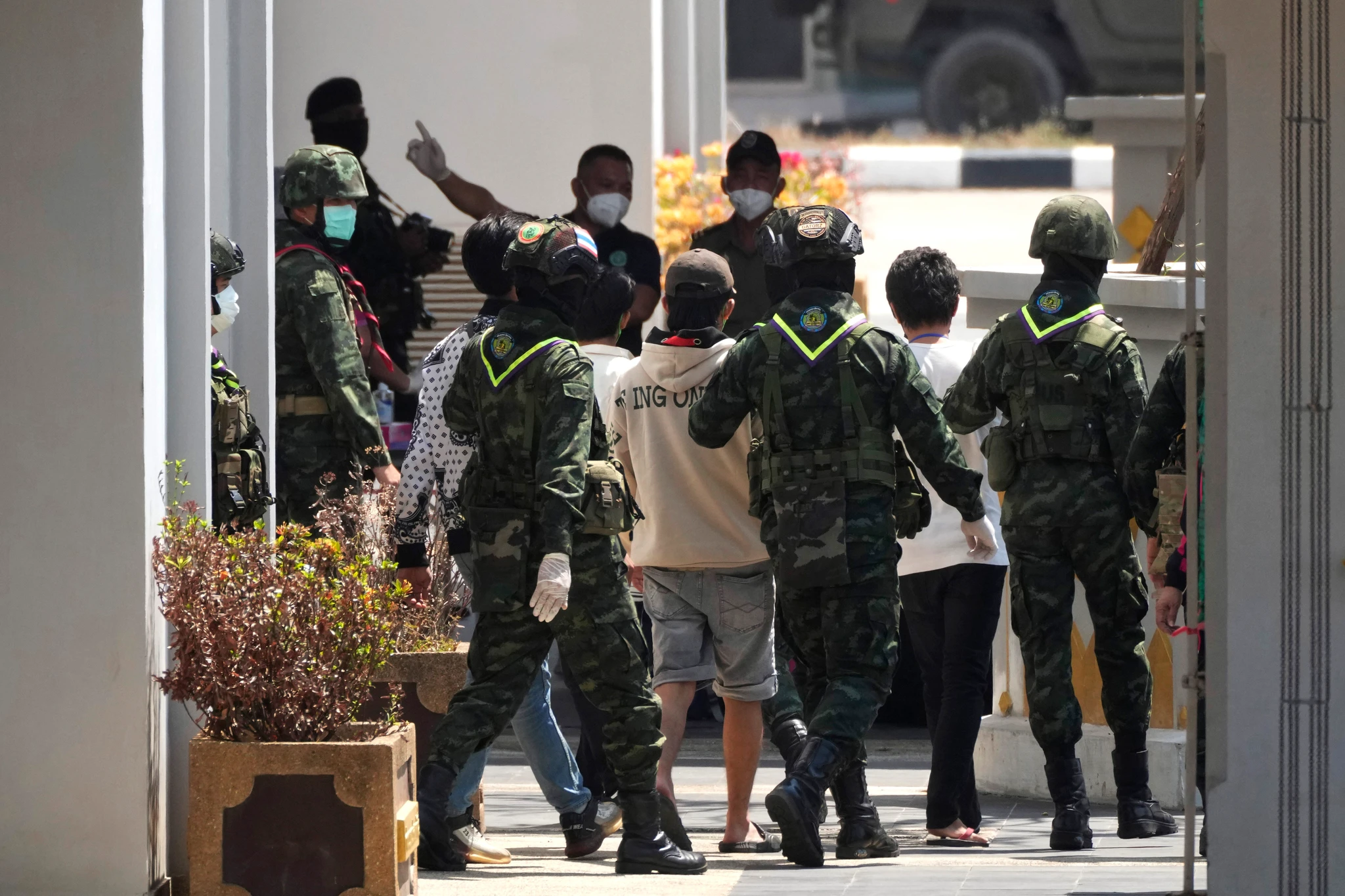
Thousands of workers have fled suspected online scam compounds across Cambodia, according to government officials and human rights groups monitoring the situation. The sudden movement has drawn international attention to the country’s long-standing struggle with cyber fraud and human trafficking. Many of those leaving are believed to be foreign nationals who were lured into the country under false promises of legitimate employment. Their escape highlights the scale and severity of exploitation taking place behind closed doors.
Witnesses described scenes of confusion and exhaustion as groups of workers emerged from heavily guarded facilities. Some carried small bags with personal belongings, while others appeared to have nothing at all. Many of the individuals looked disoriented and uncertain about where to go next. Their departure marks one of the largest visible exits from scam operations in Cambodia to date.
Officials say the mass exodus follows a renewed crackdown on illicit scam networks operating throughout the country. Authorities claim recent enforcement measures have pressured operators to release workers or abandon facilities altogether. However, rights advocates caution that many departures may be unplanned or chaotic rather than coordinated rescues. This raises concerns about the safety and long-term welfare of those who have escaped.
Foreign embassies in Phnom Penh and other cities have reported an influx of people seeking help. Diplomatic missions are struggling to manage the sudden demand for shelter, documentation, and assistance with repatriation. In some cases, embassies have set up temporary support areas to provide food and basic care. Officials warn that resources are being stretched thin as more workers continue to arrive.
Inside Cambodia’s Scam Compound Network
Cambodia has become a regional hub for online scam operations, many of which are run from fortified compounds. These facilities often appear outwardly legitimate but function as tightly controlled environments. Workers inside are typically forced to conduct fraud targeting victims overseas, including romance scams and fake investment schemes. Those who refuse or fail to meet quotas reportedly face punishment.
Recruitment into these operations often begins online, with job advertisements promising high salaries and easy work. Victims are frequently told they will work in customer service, marketing, or technology roles. Upon arrival, passports may be confiscated, and freedom of movement severely restricted. Many workers realize too late that they are trapped.
Survivors have described harsh working conditions, including long hours, constant surveillance, and psychological abuse. Some report being threatened with violence or financial penalties if they attempt to leave. Others say they were sold or transferred between compounds. These accounts paint a picture of an industry built on coercion and fear.
Human rights organizations have warned for years that the scam sector relies heavily on human trafficking. Despite repeated promises of reform, enforcement has been inconsistent. Criminal networks are often well funded and adaptable, allowing them to evade authorities. This has made dismantling the system particularly difficult.
Regional and International Pressure Mounts
The recent wave of departures comes amid increasing pressure from foreign governments. Several countries whose citizens have been affected have demanded stronger action from Cambodian authorities. International criticism has intensified as evidence of abuse has accumulated. This pressure has pushed the issue higher on diplomatic agendas.
Some governments have introduced sanctions or travel advisories in response to the situation. Others have increased cooperation with law enforcement agencies to target scam organizers. These moves appear to have disrupted operations, at least temporarily. Observers believe this disruption may have contributed to workers being released or fleeing.
Cambodian leaders have publicly pledged to crack down on cyber fraud and trafficking. Officials say they are committed to restoring the country’s reputation and protecting vulnerable people. However, critics argue that past efforts have lacked follow-through. They stress that lasting change will require structural reforms and accountability.
Experts also warn that sudden closures of scam compounds can create new risks. Without proper planning, released workers may be left homeless or exposed to further exploitation. This underscores the need for coordinated rescue and rehabilitation programs. Simply allowing people to leave is not enough.
Uncertain Futures for Escaped Workers
For those who have fled, the road ahead remains unclear. Many lack passports, money, or clear documentation of their identity. This complicates efforts to return home or seek legal work elsewhere. Some workers fear retaliation from the criminal groups they escaped.
Non-governmental organizations have stepped in to provide temporary shelter and counseling. These groups emphasize the importance of trauma-informed care, as many survivors suffer psychological distress. Long periods of confinement and abuse can leave lasting scars. Support networks are crucial for recovery.
Reintegration into home communities is another major challenge. Some returnees worry about stigma or debt accumulated during their ordeal. Others fear falling back into risky job offers out of economic necessity. Without sustained assistance, the cycle of exploitation may continue.
Advocates argue that prevention must be prioritized alongside rescue efforts. This includes better regulation of recruitment agencies and stronger cross-border cooperation. Public awareness campaigns could also help potential victims recognize warning signs. Addressing the root causes is essential to stopping future abuse.
Calls for Long-Term Reform
The mass flight from scam centres has reignited debate about Cambodia’s responsibility to dismantle the industry. Rights groups say the government must go beyond reactive measures. They are calling for transparent investigations into those who profit from the operations. Accountability at higher levels is seen as critical.
International organizations have urged coordinated regional action. Scam networks often operate across borders, making isolated enforcement ineffective. Sharing intelligence and harmonizing laws could help disrupt trafficking routes. Collaboration will be key to long-term success.
There is cautious optimism that recent developments could mark a turning point. The visibility of the crisis has made it harder to ignore. However, skepticism remains due to past failures. Sustained political will will determine whether meaningful progress is achieved.
As thousands of workers attempt to rebuild their lives, the global spotlight remains on Cambodia. Their experiences serve as a stark reminder of the human cost of cybercrime. Whether this moment leads to lasting reform or fades from attention remains to be seen.
