

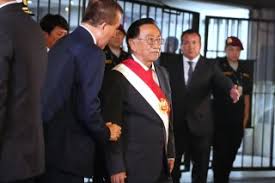
José María Balcázar Named Interim President of Peru Amid Political Turmoil
Peru’s Congress has officially elected José María Balcázar as the country’s interim president, marking another chapter in the nation’s ongoing political instability. The decision follows the dismissal of the previous interim leader, José Jerí, amid mounting concerns over undisclosed meetings with business interests and growing public criticism. Balcázar now assumes leadership at a crucial time as Peru prepares for national elections in April 2026.
Balcázar, 83, brings decades of experience in law, politics, and academia to the role. He has previously served as a legislator representing the Perú Libre party and has been involved in numerous legal and social reforms throughout his career. Despite his experience, his leadership is already facing scrutiny due to past controversies and public skepticism over the ability of interim leaders to stabilize the government during periods of unrest.
The election of Balcázar took place during a tense session in the National Congress in Lima, where lawmakers debated multiple candidates over several rounds before reaching a consensus. The final vote reflected the deep divisions in Congress, highlighting the ongoing struggle between political factions and the challenge of achieving stable governance in Peru.
Political Context and Background
Peru has experienced frequent changes in leadership in the last decade, with several presidents removed through impeachment, resignation, or legal investigations. This political volatility has created a climate of uncertainty that has affected both domestic policy and international confidence. Citizens have grown increasingly frustrated with short-term administrations that struggle to implement consistent reforms or maintain public trust.
The removal of José Jerí, Balcázar’s predecessor, was seen as a necessary step by Congress to address public concerns and ensure transparency during the electoral transition. However, some analysts warn that rapid leadership changes may further weaken the perception of Peru’s political institutions and discourage foreign investment in key sectors such as mining and infrastructure.
Balcázar’s election underscores the constitutional role of Congress in managing transitional leadership. According to Peru’s succession rules, when the presidency becomes vacant, Congress has the authority to appoint an interim leader until national elections can determine a permanent president. While this mechanism ensures continuity, it also places significant responsibility on interim leaders to navigate crises without overstepping their limited mandate.
Challenges Facing Balcázar’s Interim Government
Balcázar steps into the presidency with several immediate challenges. The foremost priority is overseeing the upcoming general elections scheduled for 12 April 2026. Ensuring a transparent, fair, and widely accepted electoral process is essential to maintaining public confidence and preventing further unrest. Balcázar must coordinate with the electoral commission, law enforcement agencies, and political parties to guarantee that elections proceed without disruption.
Economic stability is another pressing concern. Peru faces persistent inflation, inequality, and social unrest in regions heavily reliant on mining and agriculture. Investors and international observers are watching closely to see how the interim government will manage fiscal policy, regulatory reforms, and trade relations during this transitional period. Balcázar’s leadership will be judged largely on his ability to maintain calm and provide clear guidance during these uncertain times.
In addition, Balcázar must rebuild trust between the executive branch, Congress, and civil society. Public dissatisfaction with political elites has grown, and protests have occasionally erupted in response to controversial decisions or allegations of corruption. The interim president will need to engage with community leaders, civil society organizations, and opposition parties to foster dialogue and encourage cooperation across political divides.
Security challenges also loom large. Certain regions of Peru continue to experience clashes between local populations and criminal networks, often fueled by disputes over land, resources, or governance. The interim government will need to strengthen law enforcement and ensure that security forces operate within legal and ethical guidelines, while also addressing the root causes of violence and unrest.
Public Reaction and Political Debate
Public reaction to Balcázar’s election has been mixed. Supporters argue that his experience and legal background make him a capable caretaker who can guide the country through a critical transitional phase. Critics, however, worry that interim presidents often lack the authority or legitimacy to enact meaningful reforms and may be susceptible to political pressure from entrenched factions.
Political commentators highlight that Balcázar inherits a legacy of mistrust in government institutions. To succeed, he must navigate complex alliances within Congress, manage relations with the judiciary, and engage with a skeptical public eager for accountability. How effectively he balances these responsibilities will define the success of his interim administration.
International observers are also weighing the implications of Balcázar’s presidency. Latin American leaders, trade partners, and human rights organizations are monitoring the transition closely, noting that Peru’s political stability has significant regional and global implications. Strengthening democratic norms and maintaining transparency will be essential for sustaining international credibility.
Looking Forward: Elections and Stability
Balcázar’s interim presidency is temporary but pivotal. With elections just months away, the administration must prioritize electoral integrity, economic stability, and social cohesion. By focusing on these key areas, the interim government can help ensure that the eventual elected president inherits a functional and credible political system.
The upcoming elections will test Peru’s political resilience. Citizens will judge candidates not only on their policy platforms but also on their ability to restore confidence in institutions after years of turbulence. Balcázar’s role is to manage this transition responsibly, serving as a stabilizing figure rather than a policymaker seeking long-term reforms.
As the nation approaches April’s polls, the spotlight remains on Congress, political parties, and Balcázar’s interim leadership. The next few months will be critical in determining whether Peru can navigate its political challenges and restore a sense of normalcy and democratic accountability to its governance.
