
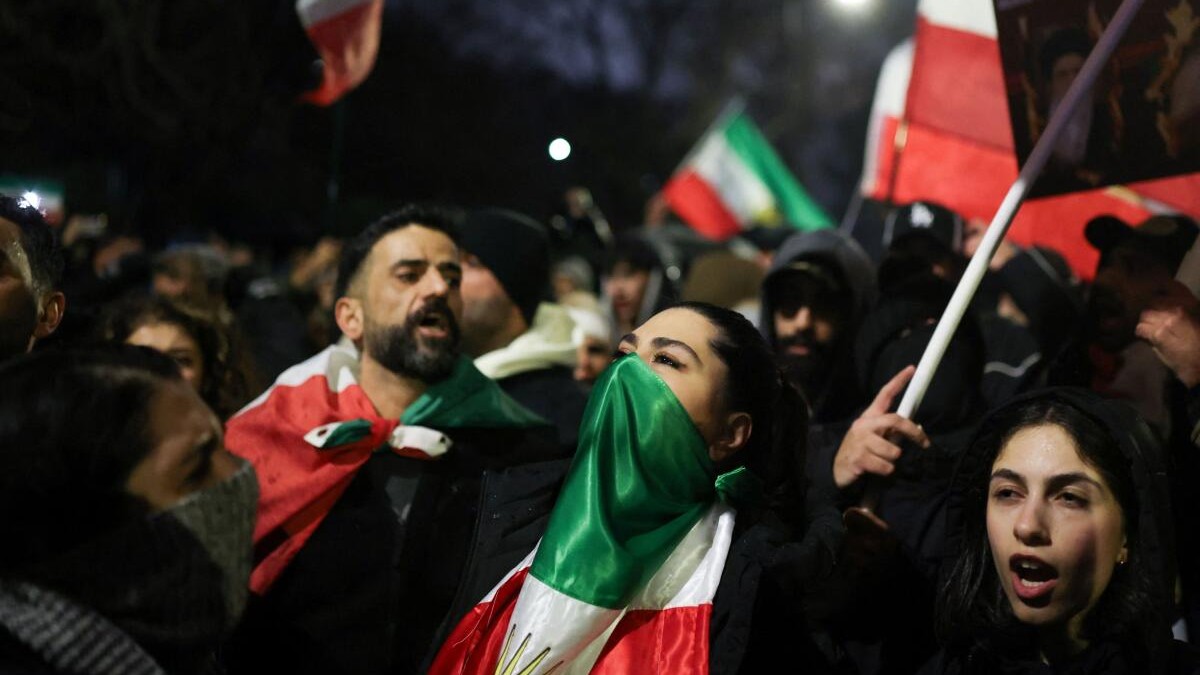

Large-scale anti-government protests have spread rapidly across Iran, marking one of the most serious waves of unrest the country has experienced in recent years.
The demonstrations began as expressions of anger over worsening economic conditions but quickly evolved into broader resistance against Iran’s political leadership, drawing participation from diverse social groups across urban and rural areas.
Crowds have gathered in major cities as well as smaller towns, chanting slogans that reflect not only economic frustration but also deep dissatisfaction with the current system of governance.
Authorities have responded with force, deploying security units to disperse gatherings and detain participants, further intensifying tensions between protesters and the state.
Reports from inside the country suggest that clashes have resulted in a significant number of deaths and injuries, though exact figures remain difficult to verify due to tight restrictions on information.
Economic Pressure Fuels Public Anger
Iran’s prolonged economic crisis has played a central role in igniting the unrest, with soaring inflation, unemployment, and currency devaluation eroding living standards for millions.
Basic necessities such as food, fuel, and housing have become increasingly unaffordable, placing immense strain on families already struggling to make ends meet.
Many protesters say their anger stems from years of unmet promises and perceived mismanagement, which they believe has left ordinary citizens bearing the cost of political and economic failures.
Initially, demonstrations focused on financial grievances, but the tone quickly shifted as protesters connected economic hardship to deeper political issues.
Small business owners, students, laborers, and pensioners have all been visible in the crowds, signaling the broad reach of the crisis.
Intensified Crackdown and Information Controls
As protests expanded, authorities imposed sweeping restrictions on internet access, sharply limiting communication both within Iran and with the outside world.
The shutdown has made it difficult for protesters to organize and for journalists and rights groups to independently verify events on the ground.
Despite these barriers, fragmented reports and eyewitness accounts indicate that security forces have used heavy force to disperse crowds, including live ammunition in some cases.
Hospitals in several cities are reportedly under strain, treating large numbers of injured demonstrators while operating under close surveillance.
Medical workers have described treating patients with serious injuries, including gunshot wounds and trauma caused by beatings during arrests.
Growing Political Demands
As the unrest has continued, protesters’ demands have grown increasingly political in nature.
Chants heard during demonstrations now frequently call for systemic change rather than limited economic reforms.
Many demonstrators argue that addressing inflation or unemployment alone will not resolve the deeper problems facing the country.
Some protesters have openly questioned the legitimacy of the ruling establishment, a rare and risky act in a country where dissent is tightly controlled.
The movement’s evolution reflects a broader loss of faith in gradual reform, with growing numbers demanding fundamental change.
Detentions, Trials, and Human Rights Concerns
Thousands of people are believed to have been detained since the protests began, including activists, students, journalists, and ordinary citizens.
Human rights organizations have raised alarm over reports of harsh interrogation methods and the use of televised confessions, which critics say are coerced.
Families of detainees have described limited access to legal representation and uncertainty about the fate of their loved ones.
There are also growing fears that some protesters could face severe sentences, including lengthy prison terms or even capital punishment.
These concerns have intensified international scrutiny of Iran’s handling of the unrest.
International Response and Diplomatic Tensions
The protests have drawn reactions from governments around the world, with many expressing concern over the violence used against demonstrators.
Western leaders have condemned the crackdown and urged Iranian authorities to respect the right to peaceful protest.
Iranian officials, however, have rejected foreign criticism, accusing outside powers of exploiting the unrest to interfere in domestic affairs.
State media has portrayed the demonstrations as the result of foreign influence rather than internal dissatisfaction, a narrative that protesters strongly dispute.
The exchange of accusations has further strained Iran’s already tense relations with several countries.
Deepening Social Divisions
Inside Iran, the protests have exposed widening divisions between the ruling elite and large segments of the population.
While some citizens support the government’s calls for order and stability, many others see the demonstrations as a last resort after years of frustration.
Generational differences have also become more visible, with younger Iranians playing a leading role in challenging authority.
Women have been particularly prominent in the protests, reflecting broader dissatisfaction with social restrictions and limited personal freedoms.
These dynamics suggest that the unrest is rooted not only in economics but also in cultural and social grievances.
Uncertain Path Ahead
Despite the government’s efforts to suppress the protests, demonstrations have continued in waves, suggesting that public anger has not subsided.
Analysts warn that continued repression could deepen resentment and prolong instability rather than restore calm.
Others argue that the leadership may seek to combine force with limited concessions to ease tensions.
For now, there is no clear indication of how or when the crisis will end.
What is clear is that the protests have fundamentally altered the political atmosphere in Iran, exposing profound challenges that extend well beyond the immediate unrest.
As events continue to unfold, the outcome will likely shape Iran’s political and social landscape for years to come.
