

Venezuela Begins Releasing Political Prisoners in Bid to Consolidate Peace
Venezuela has announced the release of a significant number of political detainees in a move that government officials described as an effort to “consolidate peace” and foster peaceful coexistence across the nation.
The announcement came just days after heightened international attention on the country, including concerns raised by foreign governments about the treatment of prisoners and the state of human rights in Venezuela.
Former opposition candidate Enrique Márquez was among those freed. In a video shared by local journalists, Márquez appeared alongside his wife and another opposition figure, Biagio Pilieri, celebrating their release. “It’s all over now,” Márquez said, reflecting the relief felt by many political prisoners and their families.
Spain’s foreign ministry confirmed that five Spanish nationals were among those released, including a dual citizen preparing to return to Spain with assistance from the Spanish embassy in Caracas. Officials described the development as a “positive step” in Venezuela’s emerging phase of national reconciliation.
One of the dual nationals released was Rocío San Miguel, a Spanish-Venezuelan lawyer, activist, and human rights advocate. San Miguel had been detained in February 2024 and faced charges including treason and conspiracy, in connection with an alleged plot against President Nicolás Maduro.
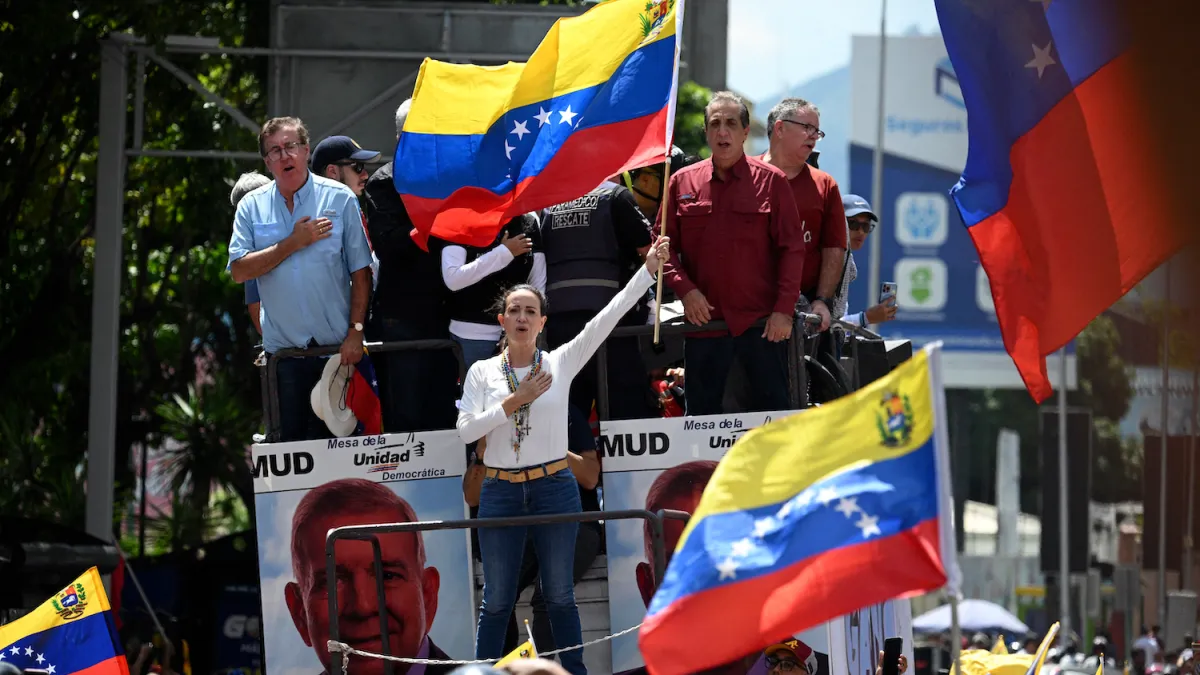
Opposition leader María Corina Machado praised the move, saying it demonstrated that injustice would not endure indefinitely. “This is an important day because it shows what we have always known: that injustice will not last forever and that truth, although wounded, ultimately finds its way,” she said in a recorded message shared on social media.
Uncertain Numbers and Widespread Hope
The exact number of detainees being released remains unclear. Human rights organizations estimate that between 800 and 1,000 political prisoners remain in Venezuela, many of whom were detained for participating in protests following the 2024 election, widely regarded as fraudulent by international observers.
Jorge Rodríguez, president of Venezuela’s National Assembly and brother of Acting President Delcy Rodríguez, described the release as a “unilateral gesture to reaffirm our unbreakable decision to consolidate peace in the republic.” He emphasized that the government aims to promote harmony and coexistence among all citizens.
News of the planned releases sparked an immediate response from families of detainees, who rushed to prisons in hopes of being reunited with loved ones. Pedro Durán, who had traveled from Spain to Venezuela, waited anxiously outside a facility in Guatire, eager to see his brother Franklin Durán, who had been detained in 2021 on accusations of attempting to overthrow the government.
“I don’t have words to express the emotion I’m feeling,” Pedro Durán said. “We’re feeling a lot of hope … We’re just waiting now.”
Foreign Nationals Among Released
Before the announcement, estimates suggested that more than 40 foreign nationals were detained in Venezuela, including approximately 20 Spaniards and five U.S. citizens. One of the U.S. detainees, James Luckey-Lange, 28, had disappeared in December and was reportedly being held at a military counterintelligence facility in Caracas.
Former U.S. President Donald Trump commented on the situation, claiming that Venezuela had a “torture chamber in the middle of Caracas that they’re closing up,” a statement that drew attention to the notorious El Helicoide complex. The building, once a modern shopping center, had been converted into a prison and detention facility infamous for alleged torture and human rights abuses.
Martha Tineo, coordinator of the NGO Justicia, Encuentro y Perdón (Justice, Encounter, and Forgiveness), confirmed that sections of El Helicoide are being vacated as part of the releases, though she noted that the complex remains extensive and houses multiple detention areas.
Domestic and International Reactions
The move has drawn both cautious praise and scrutiny. International observers and foreign governments welcomed the release of prisoners, particularly those with dual nationality, as a step toward improving Venezuela’s human rights image.
Domestically, the gesture was seen by some as an attempt to ease tensions and reduce public discontent. Analysts note that freeing high-profile opposition figures could serve to strengthen the government’s position ahead of upcoming political negotiations and elections.
Despite the releases, human rights organizations stress that Venezuela still has significant progress to make in addressing systemic abuses and ensuring due process for political detainees. Many prisoners remain in detention without trial or on charges widely considered politically motivated.
A Step Toward Reconciliation
Officials framed the releases as part of a broader effort to consolidate peace in the country, signaling a potential thaw in relations between the government and opposition. The gesture is being interpreted as an attempt to show goodwill to both the international community and domestic critics.
Families of released prisoners described the moment as emotionally overwhelming, marking a long-awaited reunion with loved ones. Many expressed hope that the move could be the first step in broader reforms aimed at restoring rule of law and democratic principles.
Observers caution that while the release of political detainees is significant, true reconciliation will require sustained political dialogue, judicial reforms, and guarantees of human rights protections to prevent further abuses.
The coming weeks are expected to reveal the scale of the releases and whether this initiative will be extended to other detainees. Analysts suggest that the success of this measure will depend on the government’s willingness to allow transparency and oversight in the process.
Looking Ahead
Venezuela’s political landscape remains tense, with widespread distrust between the government and opposition factions. The release of political prisoners could create opportunities for dialogue, but it also carries the risk of being used for political leverage ahead of future elections.
For many Venezuelans and international observers, the gesture is a cautious step toward normalizing relations and promoting peace, though skepticism remains regarding the government’s long-term commitment to democratic reforms.
As the nation witnesses these releases, families, activists, and international actors will be watching closely to see if this marks the beginning of a sustained effort to address injustice, protect human rights, and foster political reconciliation.
