

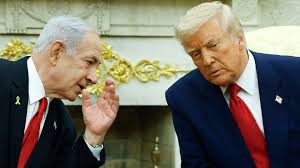
Netanyahu to meet Trump in US amid fears of Israeli regional offensives
Israeli Prime Minister Benjamin Netanyahu is travelling to the United States for high‑stakes talks with former U.S. President Donald Trump as concerns grow about the potential for new Israeli military offensives in the broader Middle East.
The meeting is scheduled to take place at Trump’s Mar‑a‑Lago estate in Florida, where both leaders will discuss a range of regional security issues, including the future of the ceasefire in Gaza, tensions with Iran, and the delicate situation along Israel’s northern border with Lebanon. The visit comes at a particularly tense moment in regional diplomacy, with fears that unresolved disputes could push Israel toward broader military action.
A critical moment for the Gaza ceasefire
One of the central topics expected to dominate the discussions is the implementation of a ceasefire agreement that has paused two years of heavy fighting in the Gaza Strip.
Although the initial phase of the ceasefire — which included a partial withdrawal of Israeli forces and the release of hostages held by Hamas — has largely been completed, efforts to move forward with a second phase have stalled. Both Israeli and Palestinian leaders have accused each other of violating the terms, and disagreements over the mechanisms for disarmament and political transition remain unresolved.
The second phase of the ceasefire plan, advocated by Trump and supported by international mediators, calls for the establishment of a non‑aligned Palestinian technocratic authority in parts of Gaza and the deployment of an international stabilization force. Israel’s reluctance to fully embrace these ideas has frustrated U.S. officials and some regional partners, complicating efforts to secure a durable peace.
Regional tensions beyond Gaza
Beyond Gaza, Netanyahu and Trump are expected to address fears of Israeli military action beyond Israel’s immediate borders.
Israeli leaders have voiced deep concerns about Hezbollah in Lebanon, a powerful armed group aligned with Iran that Israel views as an enduring security threat. Although a ceasefire has largely held along the northern border since late 2024, sporadic violence and unresolved grievances continue to strain the situation. There is worry among diplomats that renewed clashes with Hezbollah could escalate, potentially drawing in other regional players.
Iran looms large in many of these discussions. Tehran’s growing ballistic missile capabilities and support for proxy groups across the region are sources of alarm for Israeli security officials. Netanyahu is expected to press Trump for stronger pressure on Iranian military development and insist on international support to counter Tehran’s influence. The question of how far the United States is willing to go in supporting pre‑emptive or coordinated military measures against Iranian targets is likely to be a sensitive point of debate.
Domestic political pressures
Netanyahu’s trip to the United States comes at a politically charged time back home. He faces elections in the coming year and has encountered domestic dissatisfaction over the pace and direction of the peace process. Some members of his coalition have called for more aggressive action against militant groups, while others argue for greater focus on diplomatic avenues.
Seeking Trump’s backing is seen by some Israeli observers as a strategic move to bolster Netanyahu’s standing both domestically and internationally. Strong U.S. support, especially on security matters, could strengthen his position ahead of elections and signal continuity in the U.S.–Israel strategic alliance.
At the same time, U.S. officials have expressed frustration with what they see as Israel’s reluctance to fully support the international framework laid out for stabilizing Gaza. There are concerns in Washington that delays could undermine confidence in the peace plan and fuel further instability.
The broader diplomatic landscape
The Netanyahu–Trump summit will also take place amid active diplomatic efforts involving other regional actors.
Egypt, Qatar, and Turkey, among others, have been engaged in back‑channel discussions aimed at bridging gaps between Israeli, Palestinian, and international expectations for the next phase of peace efforts. These talks reflect a broader recognition that lasting stability in the Middle East requires cooperation beyond the bilateral U.S.–Israel relationship.
While each of these players has its own priorities and red lines, there is a shared interest in preventing the conflict from reigniting on a larger scale — especially if tensions with Iran or Hezbollah flare up.
Analysts have also highlighted the importance of reconciling security concerns with humanitarian needs. Gaza’s infrastructure remains devastated from years of conflict, and worsening conditions — such as winter flooding in refugee camps and insufficient aid delivery — have underscored the human stakes of political decisions.
What’s at stake
The outcome of the Trump–Netanyahu discussions could have far‑reaching implications for the region. Progress on the ceasefire’s implementation might ease immediate tensions and foster momentum toward a longer‑term peace process. Conversely, failure to agree on a clear path forward could embolden hardliners on all sides and increase the risk of renewed violence.
There are also broader strategic considerations, such as arms sales, military cooperation, and regional alliances, that could be influenced by the tone and substance of the talks. For Israel, maintaining a technological edge and ensuring strong U.S. support remain top priorities. For the United States, balancing diplomatic engagement with efforts to contain Iran and support peace efforts poses ongoing challenges.
Ultimately, Netanyahu’s visit to the United States underscores how interconnected the issues of Gaza, Iran, and broader Middle Eastern security have become — and how pivotal U.S.–Israeli coordination remains in shaping the region’s future.
